That pink bowl you always reach for, the print that reminds you of a favorite trip, the striped cushion you keep moving from room to room these are useful clues to your decorating taste. Dopamine decor starts with noticing what you enjoy looking at, then giving those things a place in your home.
You do not need a rainbow-painted house to try it. A small entryway can begin with a colorful key dish, a framed postcard, and somewhere sensible to put your shoes.
This beginner’s guide explains the idea and gives you a practical way to create your own happy hello.
1. What Is Dopamine Decor?
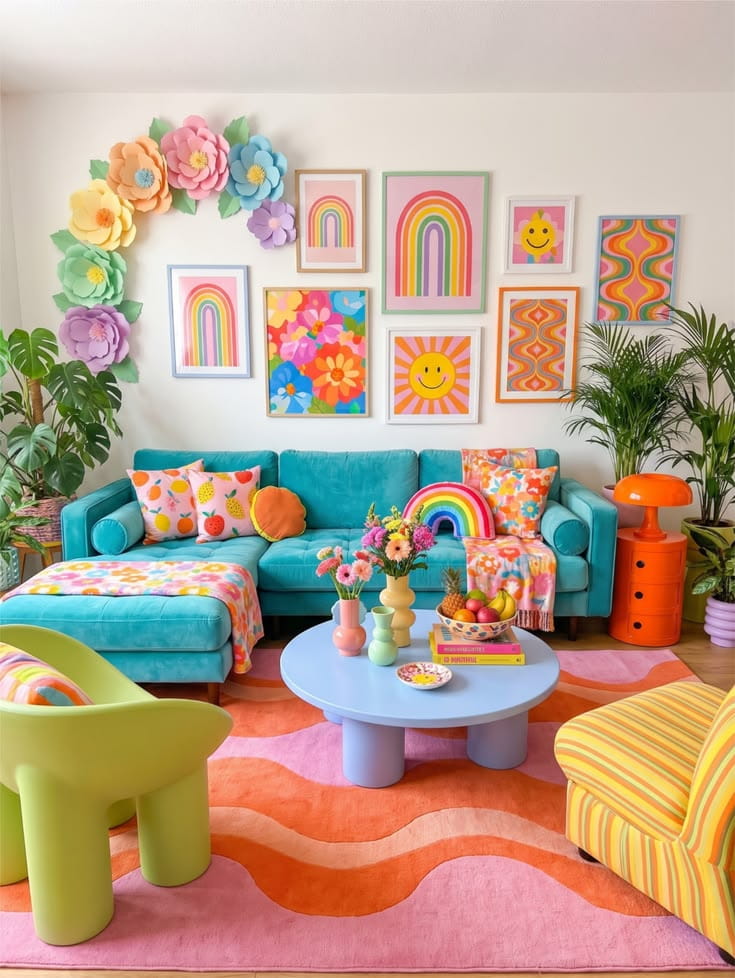
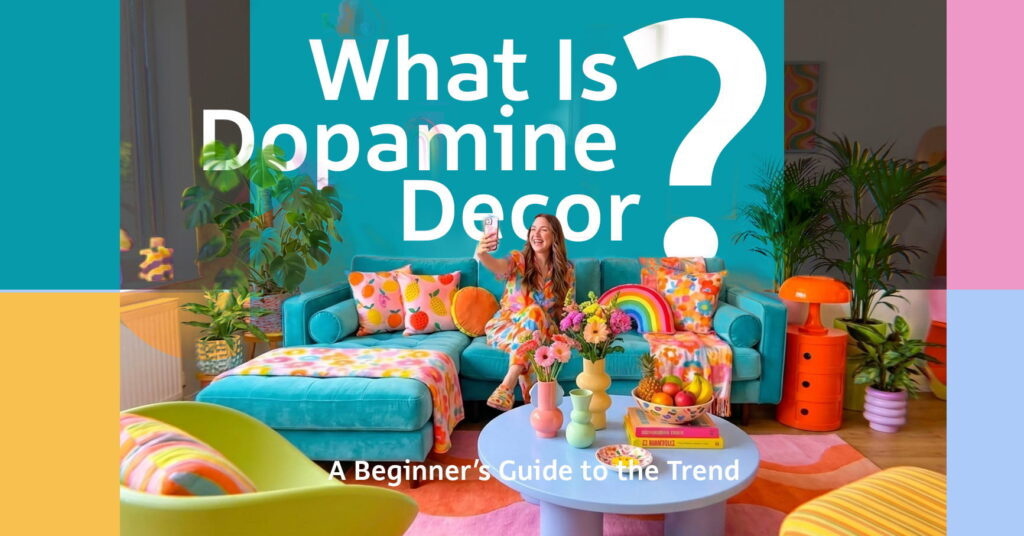
Dopamine decor is a personal approach to decorating that uses enjoyable colors, patterns, textures, and meaningful objects to make a home feel welcoming. Design coverage connects it with “dopamine dressing,” the fashion idea of choosing clothing for joyful self-expression.
The name is a shorthand for the feeling the style aims to create. It is not a promise that a particular paint color will raise your dopamine levels.
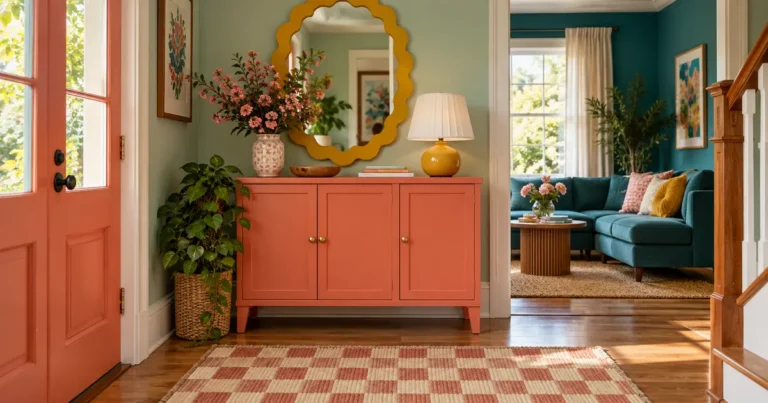
For FoyerJoy, the starting point is simple: choose details you enjoy seeing when you walk through the door. That could be a coral cabinet, a mint basket, or a drawing made by someone you love. Your happy hues do not have to match anyone else’s.
Further reading: Architectural Digest’s introduction to dopamine decor.
2. What Does Dopamine Decor Look Like?
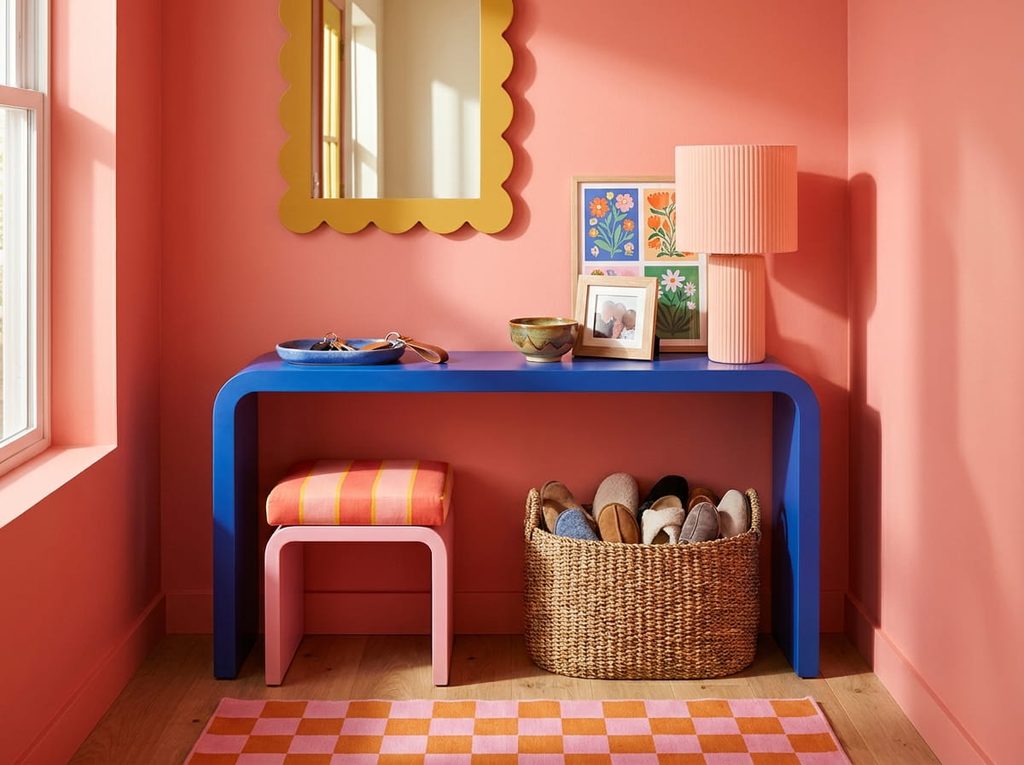
There is no required shopping list. You can build the look through a few different ingredients:
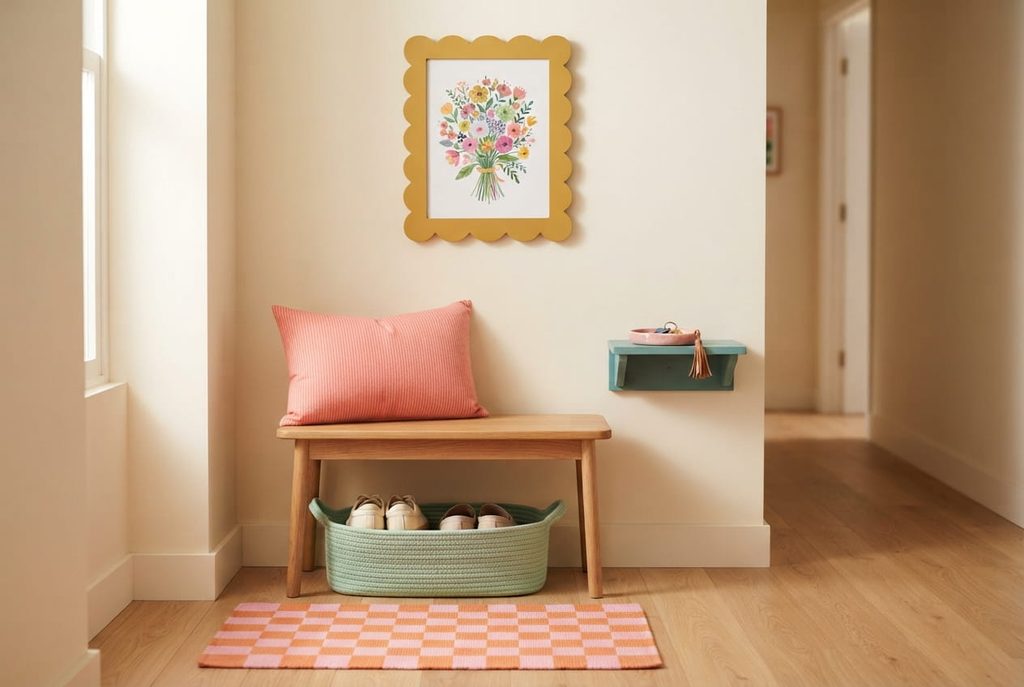
- Color: a yellow mirror frame, pink stool, or blue key tray.
- Pattern: striped cushions, checked mats, or illustrated prints.
- Texture: woven baskets, glazed ceramics, or a softly ribbed lampshade.
- Playful shape: a scalloped frame or rounded wall hook.
- Personal meaning: a family photograph, inherited bowl, or framed concert postcard.
These details work best when they belong to your daily routine. A colorful basket becomes more than a decorative object when it holds the slippers you wear every evening.
Try choosing one feature first. If a patterned runner catches your eye, let the nearby accessories pick up two of its colors. You can add variety without making every surface compete for attention.
3. Does Every Color Need to Be Bright?
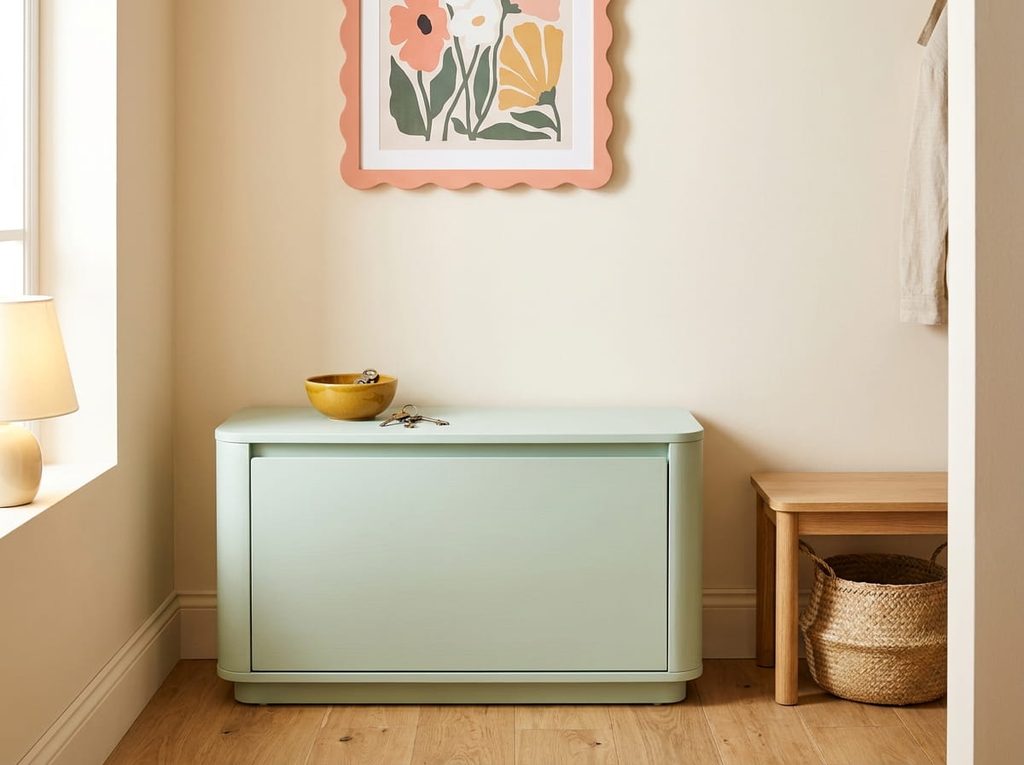
Your palette should suit your taste and the light in your home. You might enjoy candy pink with pale mint, or choose a deeper blue with warm yellow. Both can create a colorful welcome.
A useful beginner exercise is to pick three roles:
- Main color: the largest colorful item, such as a cabinet or rug.
- Supporting color: something nearby, such as artwork or a basket.
- Small accent: a hook, vase, or catchall.
For example, try a mint shoe cabinet, a coral print, and a mustard key bowl. Keeping the colors connected gives each piece a reason to be there.
Look at your choices in daylight and under your evening lighting before making permanent changes. A shade you like on a phone screen may look different beside your flooring.
Need a starting combination? Explore 7 Colorful Entryway Palettes to Try in a Small Space.
4. How to Try Dopamine Decor in a Small Entryway
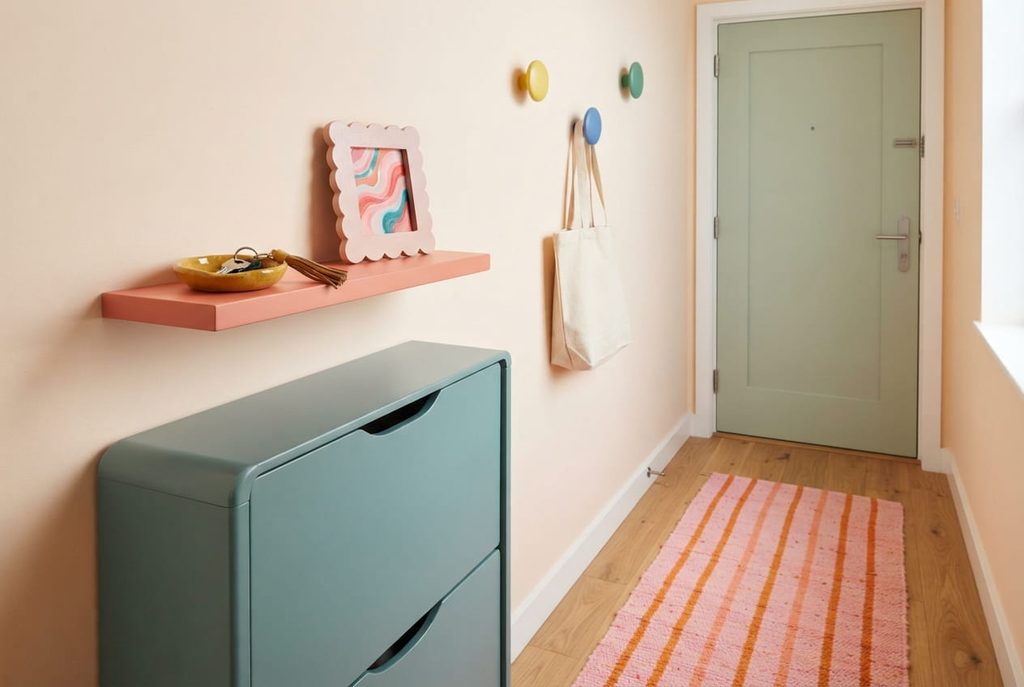
Start by watching what happens near your front door. Where do bags land? Which shoes stay out? Do keys disappear beneath the mail?
Solve one of those problems with a detail you enjoy.
If keys need a home, use a colorful dish. If coats pile onto a chair, consider a properly installed hook rail. If shoes spread into the walkway, measure for storage that fits the space and your actual shoe collection.
Then add one visual focal point. It could be a mirror with a painted frame or a print above the cabinet. Let that piece guide the nearby colors.
Before bringing in furniture, check the door swing and leave enough room to walk comfortably. Open cabinet doors and drawers during your measuring check. A narrow unit still needs space to function.
Small space, big joy idea: Put a cheerful catchall on an existing shelf and hang one small print above it. You can create a recognizable entryway corner without adding furniture to the floor.
5. A Beginner’s Five-Step Decorating Plan
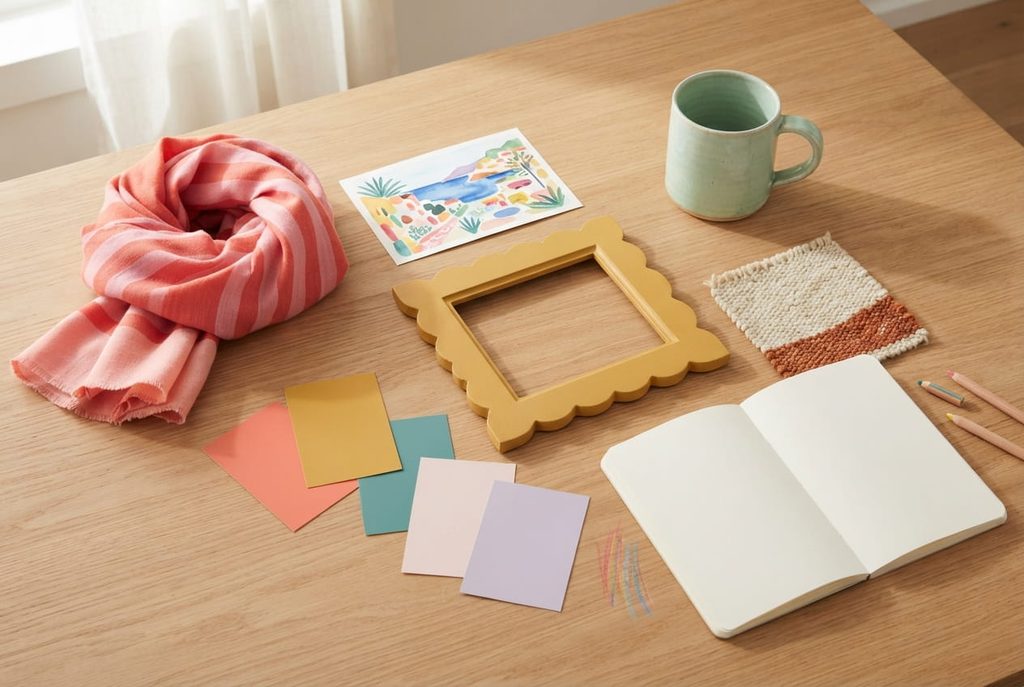
Step 1: Collect your own color clues
Choose three things you already like: a scarf, postcard, mug, photograph, or piece of fabric. Notice the colors that appear more than once. Those connections are a better starting point than buying a whole matching collection.
Step 2: Choose one area
Work on the cabinet top, the wall beside the door, or the bench. A clearly defined area makes decisions easier and gives you a place to stop.
Step 3: Keep the useful pieces
Keep storage that fits and furniture that works. You may only need a different cushion cover, a new frame color, or a basket moved from another room.
Step 4: Make one visible change
Try your main color on a movable object first. Live with a colorful tray or textile before deciding whether you want that shade on a larger piece.
Step 5: Check the everyday result
Use the entryway for several days. Can you find your keys? Does your bag have a place? Can you open the door easily? Keep the details that help the space feel welcoming and workable.
6. Budget and Renter-Friendly Ways to Begin
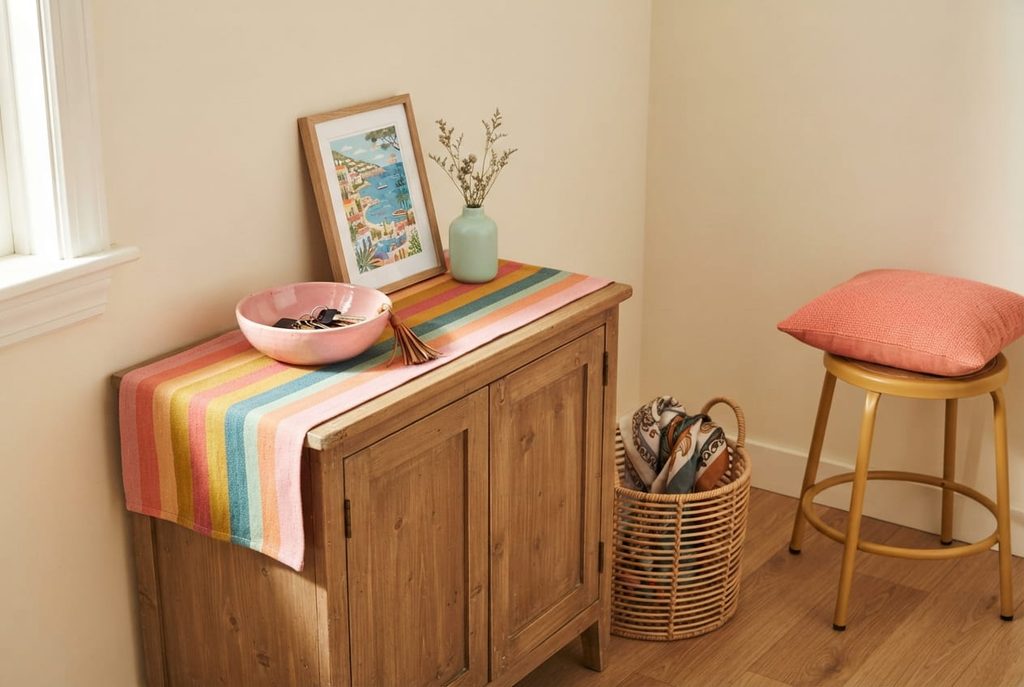
Start with a no-spend rearrangement. Move a colorful bowl to the door, frame a postcard you own, or use a spare basket for scarves. Seeing familiar belongings in a new setting can help you decide what the space still needs.
For a small purchase, choose one item that fills a real gap. A washable cushion cover may be useful on a bench you already own. A key dish makes sense if small belongings need a landing spot.
For DIY, repaint a removable wooden frame using products suited to its surface. Check preparation and drying instructions before starting. If you want to change furniture, try a hidden test area first and allow the finish to cure as directed.
Renters can focus on movable accessories and freestanding furniture. Get permission for changes covered by your lease. Removable adhesive products can still affect finishes, so check compatibility, test discreetly, and follow the manufacturer’s removal instructions.
For mirrors, shelves, and hooks, choose fixings appropriate to the wall and the item’s weight. Secure furniture where the manufacturer requires it.
7. Common Beginner Mistakes to Avoid
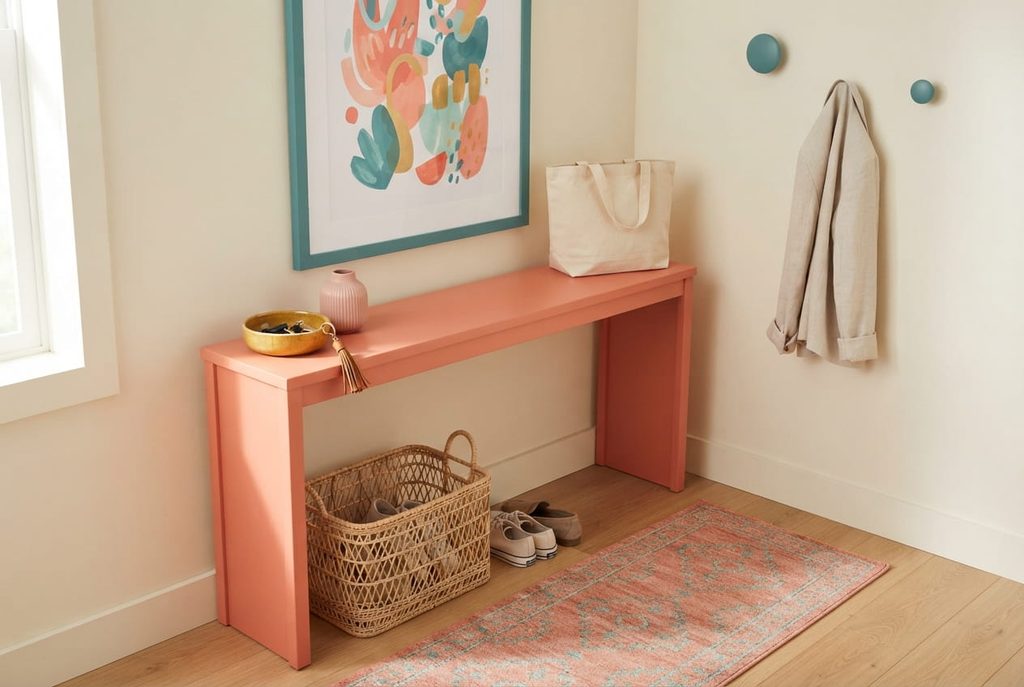
Buying a whole look at once. Start with one corner. You will learn more from using it than from ordering every matching accessory.
Choosing color without considering function. A charming stool is only helpful if it fits and gives you somewhere usable to sit.
Covering the landing surface. Leave space for the things you carry home. Move extra decorative objects to a wall shelf or another room.
Mixing patterns without a connection. Give two patterns a shared color, or pair a large-scale pattern with a smaller one. Test the combination with movable textiles first.
Decorating only for a photograph. Make sure the arrangement works with jackets, bags, wet shoes, and daily mail in the picture.
Copying someone else’s favorite colors. Save inspiration for ideas about placement and proportion. Choose the actual hues around your own preferences.
8. Frequently Asked Questions
Is dopamine decor the same as maximalism?
They can overlap. Maximalist spaces often include many layers of pattern and objects, while dopamine decorating can start with a few personally enjoyable details. You decide how much you want to include.
Can I try dopamine decor without painting?
Yes. Artwork, a key dish, a cushion cover, or colorful storage can introduce the style without changing the walls.
What colors should a beginner choose?
Start with a color you already enjoy in your belongings. Add a supporting color and one smaller accent. There is no compulsory palette.
Does dopamine decor need to be expensive?
No. Rearranging existing belongings, framing personal keepsakes, and refreshing a small accessory can be enough to begin.
Will dopamine decor make me happier?
The style aims to make your surroundings more enjoyable and personal. Your response will vary, and the trend name does not establish a guaranteed effect on brain chemistry.
What should I decorate first?
Choose a useful spot you see every day. In an entryway, the key tray or shoe-storage area is a manageable place to start.
Your first change can be as small as giving a favorite bowl a new job. Build from there, keeping the pieces that suit your routine and bring a little pleasure to coming home.
Your daily dose of happy hues.
Pingback: Dopamine Decor 101: Design a Joyful Home | FoyerJoy