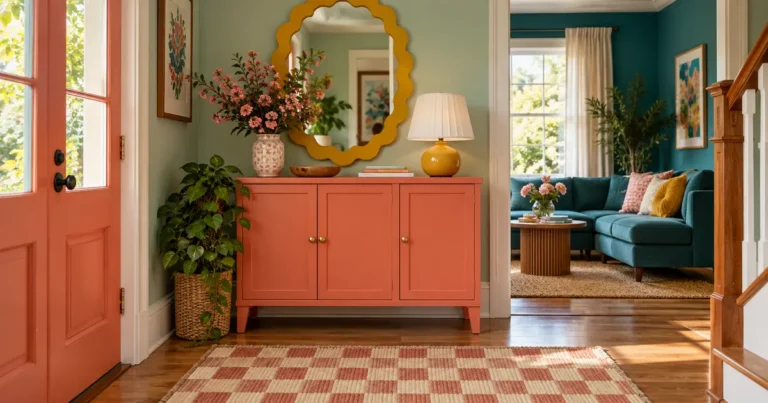
You come home with a bag on one shoulder, keys in your hand, and a stack of mail you did not ask for. The front door opens onto the same corner you pass every day. What would make that moment a little more enjoyable?
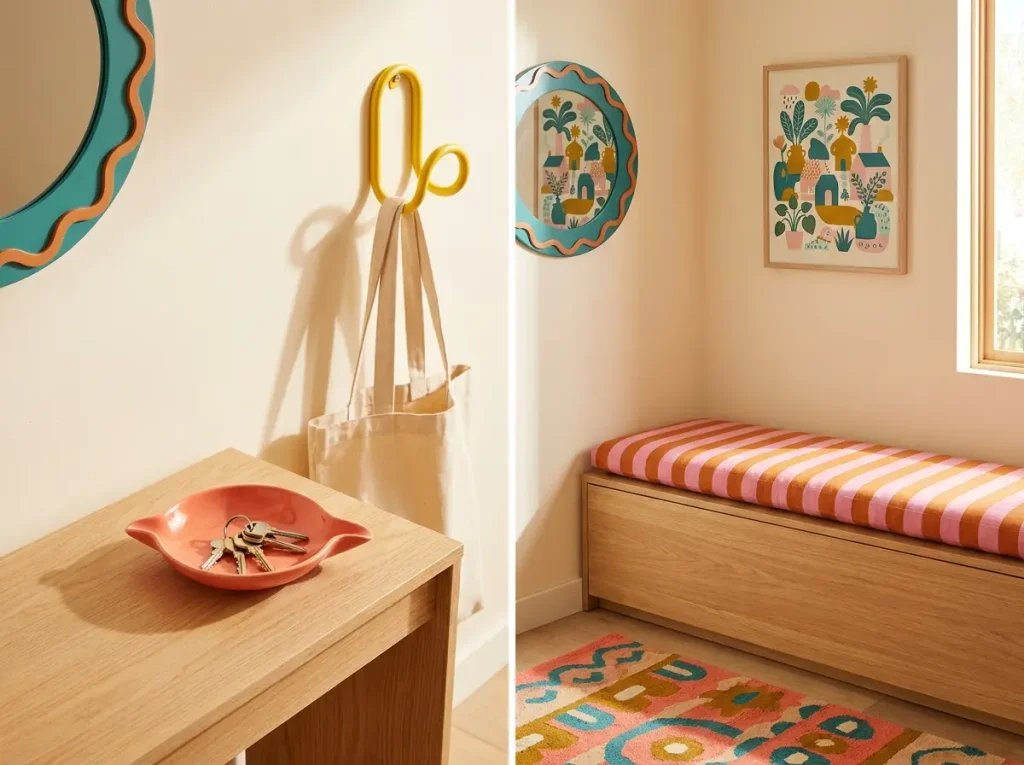
Perhaps a striped bench where you can sit to remove your shoes. A blue dish that makes your keys easy to find. Or a pink-framed drawing that reminds you of someone you love.
That is the starting point for dopamine decor 101: build a home around details you enjoy seeing and using. Color can be part of the plan, alongside comfortable seating, familiar belongings, and storage that suits your routine.
This dopamine decor 101 guide takes you from choosing your first colors to carrying them through different rooms. Start near the front door, work with what you own, and let each change earn its place.
New to the style? Start with What Is Dopamine Decor? A Beginner’s Guide to the Trend.
1. Dopamine Decor 101: Define Your Happy Home
Begin your dopamine decor 101 plan by describing three moments you would like your home to support.
Your list might include an easier morning departure, a comfortable place to read after work, and a dining table you want to linger at. Those moments give your decorating choices a purpose.
Now connect each moment with something concrete:
- Leaving in the morning: a visible place for your keys and bag.
- Reading after work: a supportive chair, useful light, and a cushion you enjoy.
- Sharing dinner: clear table space and colorful dishes that come out of the cupboard regularly.
Choose colors and objects around those activities. If pink makes you smile, a pink key dish may be a satisfying first step. If you enjoy deep green, that can belong in your plan too.
The word “dopamine” describes the style’s cheerful intention here. It does not establish that a room makeover will produce a particular change in brain chemistry. Your own response to the space is the useful thing to observe.
2. Build Your Dopamine Decor 101 Palette
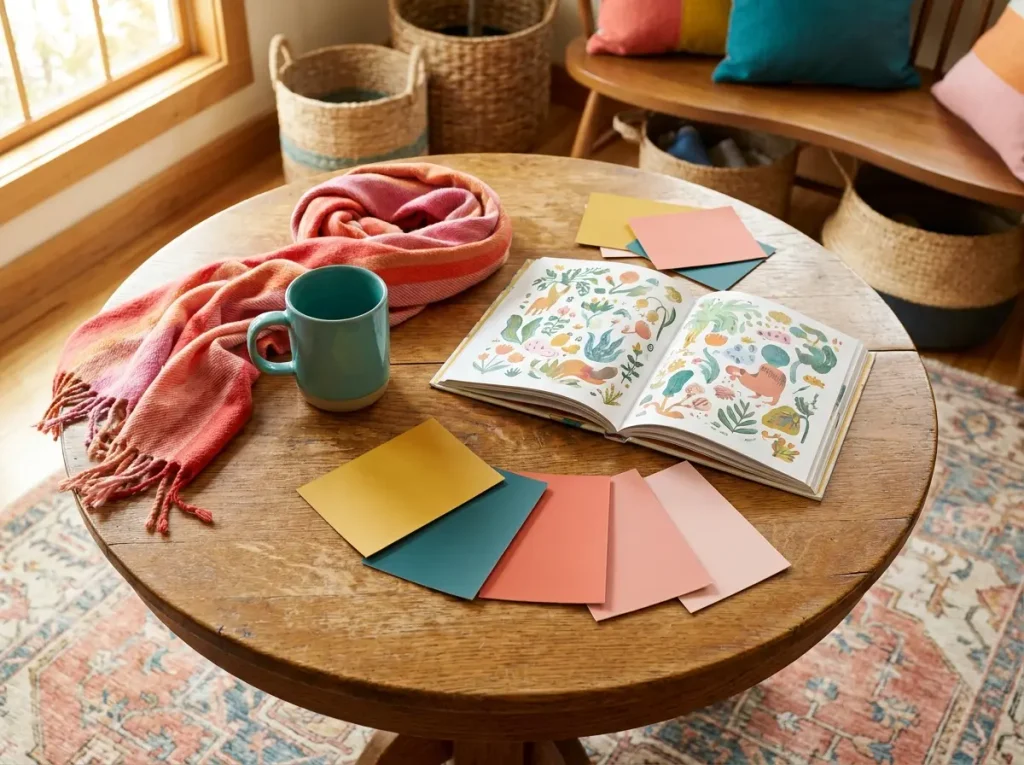
Open a cupboard or drawer before opening a shopping tab. Look for three objects you repeatedly choose: a favorite mug, scarf, book cover, or piece of art.
Place them together and notice what connects them. You may find warm pink in all three, or discover that blue and yellow already appear throughout your belongings.
A useful dopamine decor 101 exercise is to assign the colors different jobs. Give one a larger surface, repeat another nearby, and use a third in smaller details.
For example, a teal console could be the main colorful piece in an entryway. Coral artwork above it adds a supporting color, while a mustard bowl supplies a small accent. You can carry teal into the next room through a cushion rather than buying another teal piece of furniture.
Try fabric or removable accessories before committing to paint. Look at the combination beside your flooring, curtains, and existing furniture in daytime and evening light. You can also explore combinations with Benjamin Moore’s Color a Room tool before checking physical samples at home.
For more combinations, explore 7 Colorful Entryway Palettes to Try in a Small Space.
3. Give Your Entryway a Useful Pop of Color
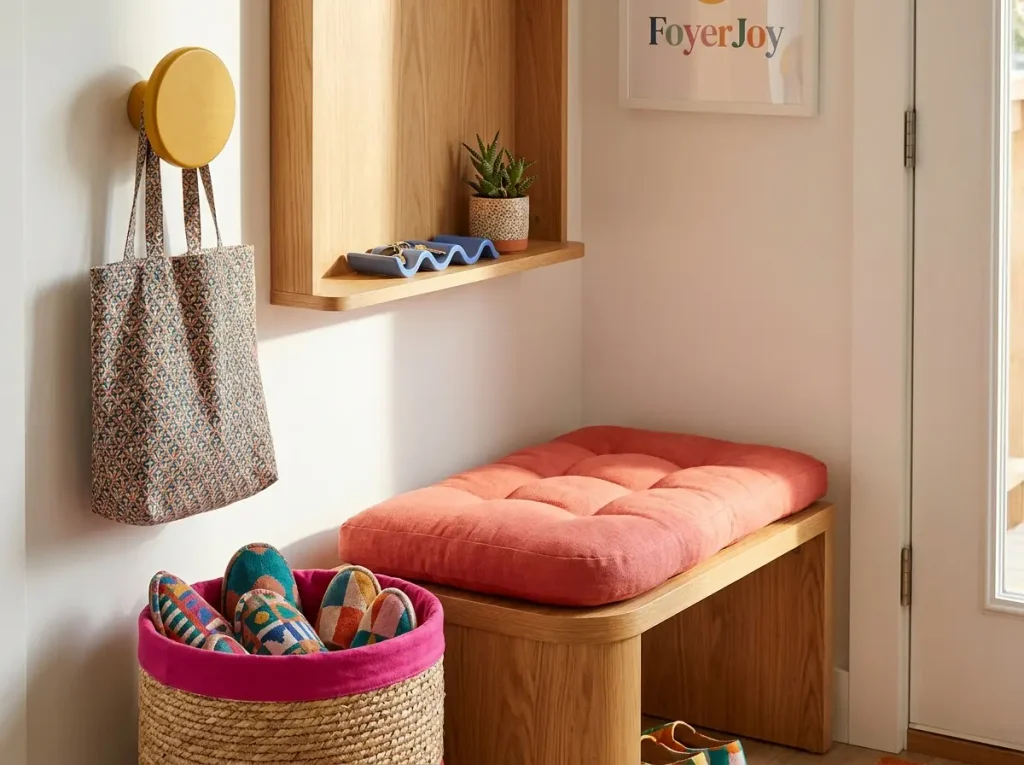
For a dopamine decor 101 project, the entryway is manageable because its daily jobs are easy to identify. It needs to receive belongings, help you get ready, and leave room to move.
Choose the most frustrating problem first. If shoes spread across the floor, concentrate on storage. If your bag occupies the only seat, give it another landing spot.
Then bring color to the solution. A basket with a pink fabric liner can hold slippers. A rounded yellow hook can mark the place for your everyday bag. A coral cushion can make an existing bench feel more welcoming.
Keep the doorway in view while you plan. Check the door swing, drawer clearance, and the space needed to sit down or reach a shelf. Avoid rugs that bunch up or catch beneath the door.
Try this first: Clear the landing surface, place one colorful catchall where you naturally drop your keys, and move everything else to its own home. Use the arrangement for a few days before adding decor.
For more entrance projects, explore Dopamine Decor Entryways: 12 Colorful Ideas for a Happy Hello.
4. Choose One Feature to Lead Each Room
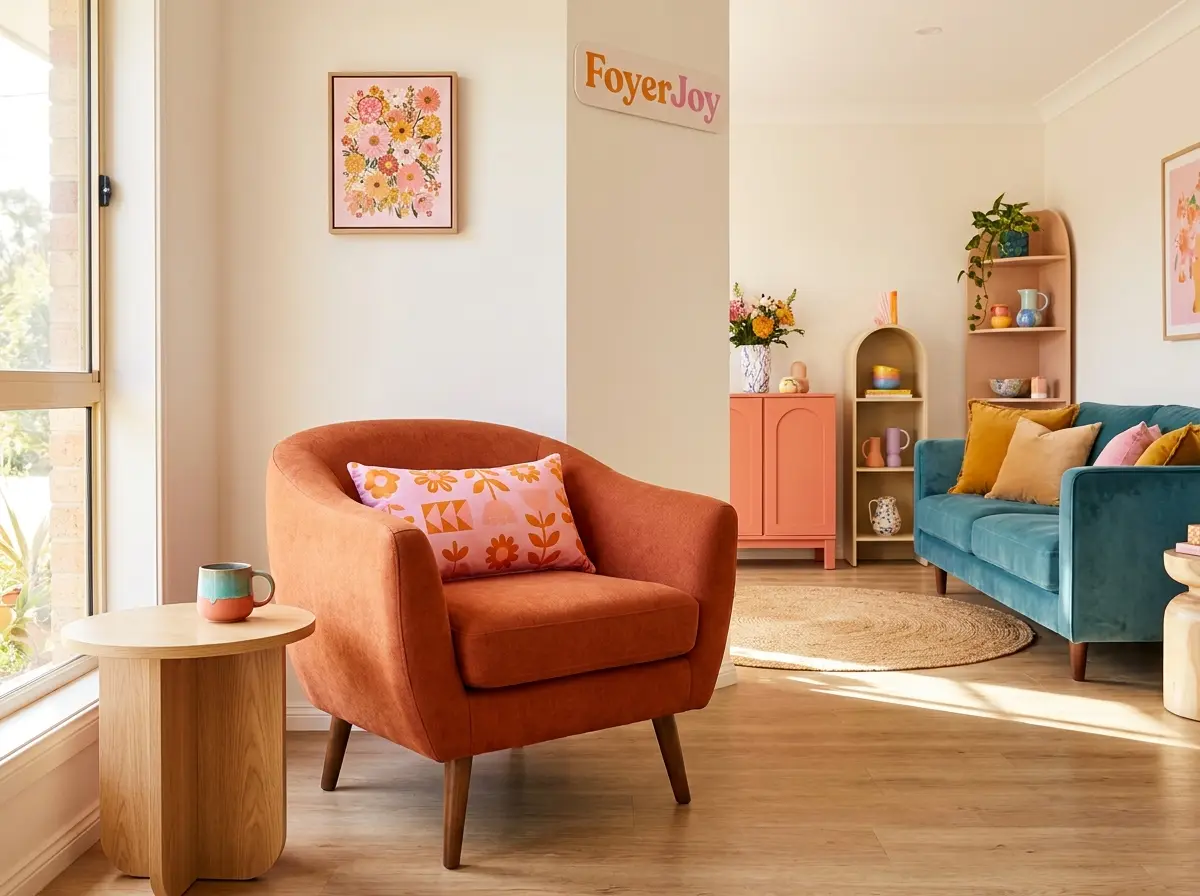
One dopamine decor 101 principle makes a room easier to decorate: decide which feature you want to notice first.
In the living room, that might be an orange chair. In the bedroom, it could be a patterned quilt. In the hallway, a gallery of floral prints may do the job.
Let nearby objects respond to that feature. An orange chair could sit beside a pink cushion whose pattern includes a little orange. A small artwork across the room can repeat the connection.
You can enjoy a richly layered look without asking every object to be equally prominent. Place smaller accessories in groups, leave useful surfaces partly clear, and check the room from the doorway.
If several pieces keep demanding your attention, temporarily move one elsewhere. You can bring it back later or discover that another room gives it a better setting.
5. Mix Patterns Through a Shared Detail
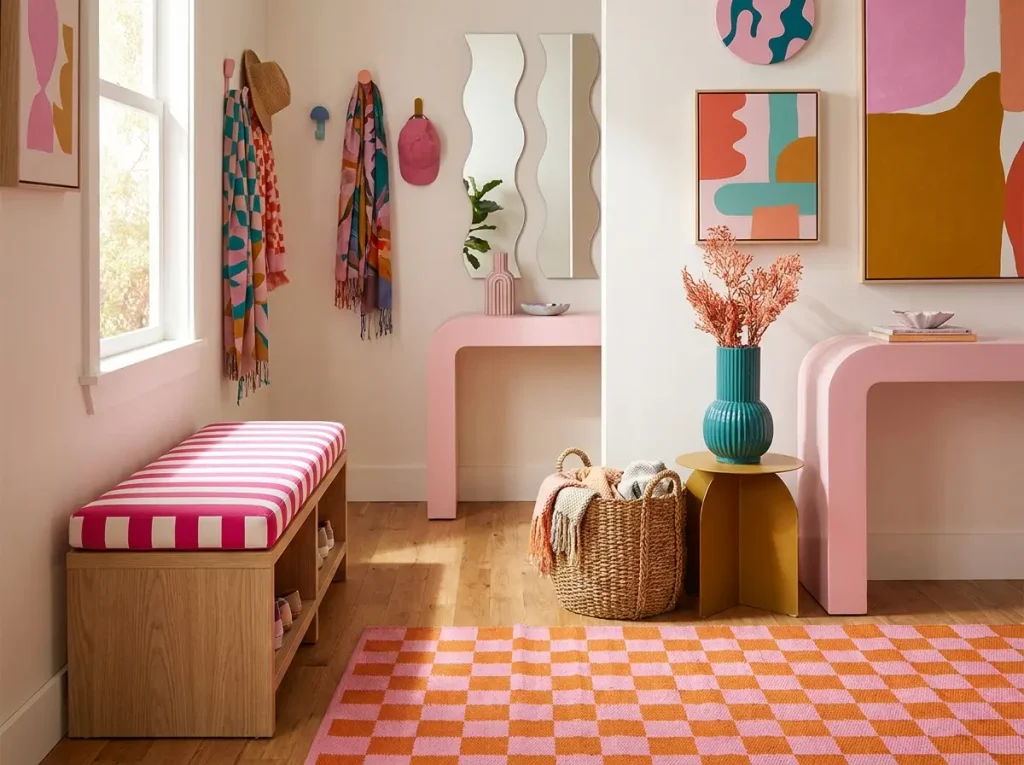
Patterns add personality to ordinary pieces: a bench cushion, tablecloth, curtain, or small rug.
For a dopamine decor 101 pattern experiment, choose two patterns that share a color. A pink-and-orange checked mat can work with a pink striped cushion because pink connects them. Different pattern sizes can also help each one remain readable.
Try the pairing close together before spreading it around the room. Lay the cushion on the bench and put the mat beside it. Stand back, then look again while the space is being used.
Balance pattern with texture. A woven basket or ribbed vase can add interest without introducing another print. Keep textiles suitable for the place they occupy; an entryway rug should tolerate the kind of foot traffic you expect.
Budget idea: Use a patterned cushion cover on an existing seat. That gives you a movable experiment before you replace a larger textile.
6. Dopamine Decor 101, Room by Room
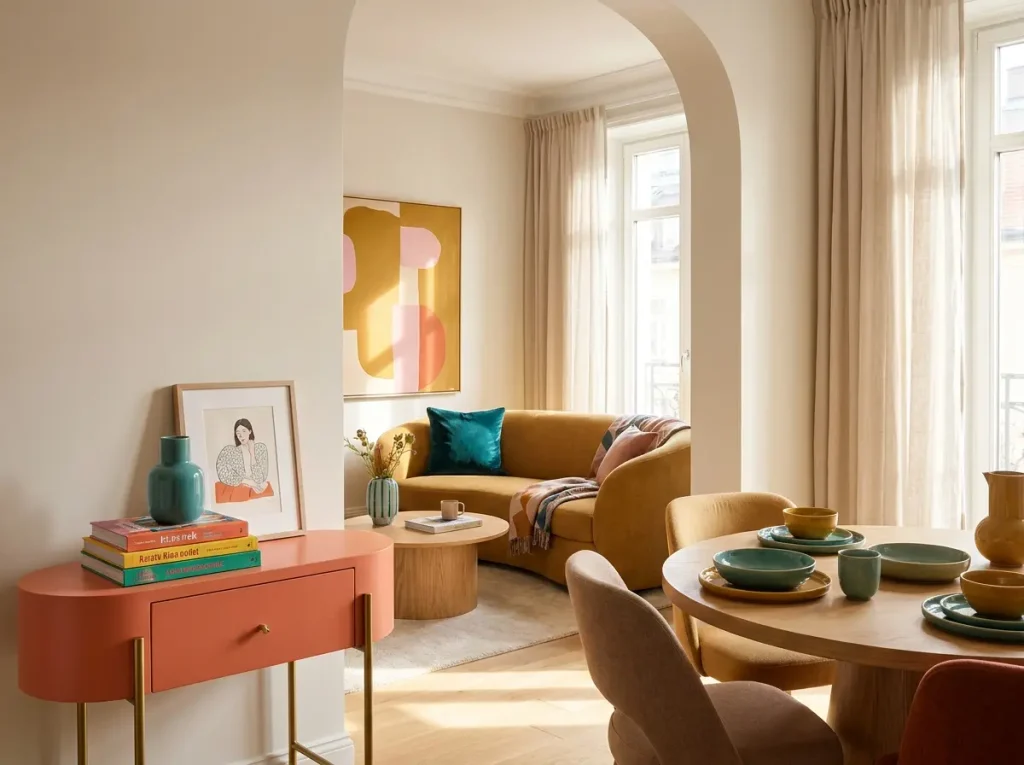
A dopamine decor 101 plan does not require decorating every room at once. Carry one familiar color into the next space and give it a new role.
Living room
Repeat an entryway color in a cushion or lampshade. Keep the seat comfortable and the side table within reach. A colorful arrangement should still support watching a film, reading, or talking with friends.
Kitchen and dining area
Bring out bowls, mugs, or a table runner you enjoy using. Give frequently used items accessible storage, and keep food-preparation surfaces available.
Bedroom
Choose color at the pace you prefer for winding down. Try a quilt, pillowcase, or framed print first. Check whether bedside lighting works for your usual evening activities.
Bathroom
A colorful hand towel, washable mat, or small storage container can refresh the room. Choose materials suited to moisture, and keep toiletries easy to reach.
Workspace
Add a favorite print or colored organizer while leaving enough desk space to work. Place decor where it will not cover your screen or interfere with everyday tools.
In dopamine decor 101, these repetitions help rooms feel connected while allowing each one to serve a different purpose.
7. Make Room for Objects With a Story
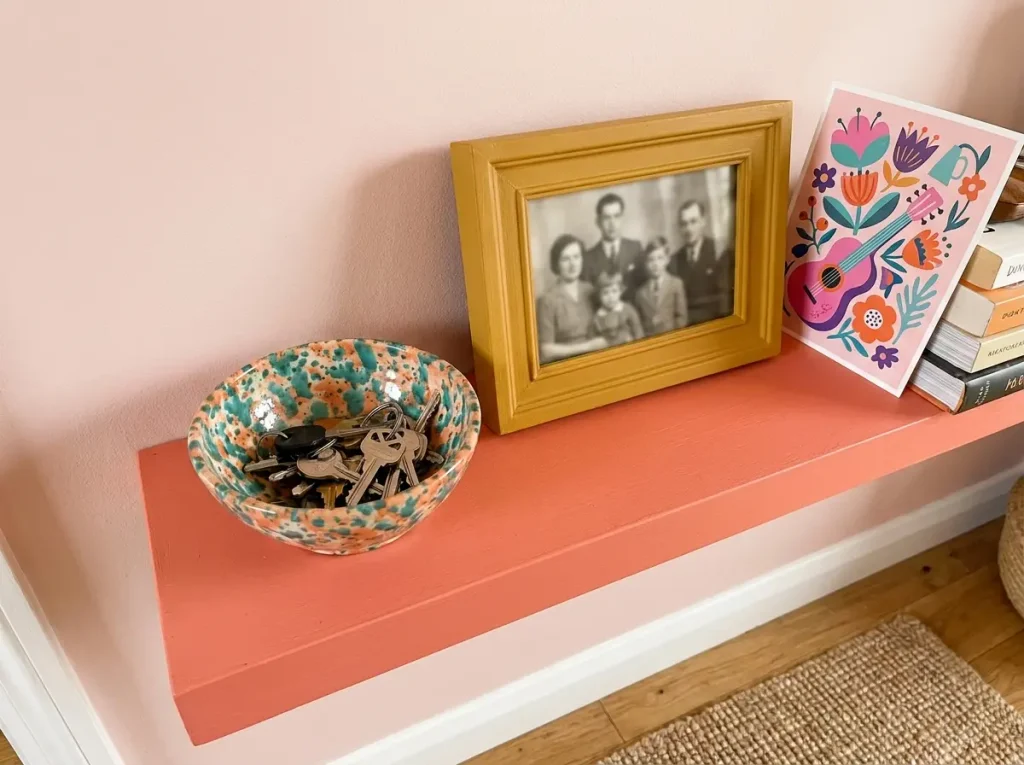
The personal side of dopamine decor 101 begins with things you already have: a handwritten recipe, a postcard, an inherited bowl, or a photograph from an ordinary good day.
Choose an object you want to see regularly and give it a practical setting. An inherited bowl might hold keys if its condition and shape suit the task. A recipe can be framed near the dining area. A concert postcard can join a small art grouping.
Leave room around keepsakes so you can notice them. If you have many, rotate a few instead of displaying everything together.
The frame or shelf can connect the object to your palette. A mustard frame might bring an old black-and-white photograph into a colorful room without changing the photograph itself.
No-spend starting point: Move one meaningful object from storage to a place you use daily.
8. Check Lighting and Texture Before Buying More
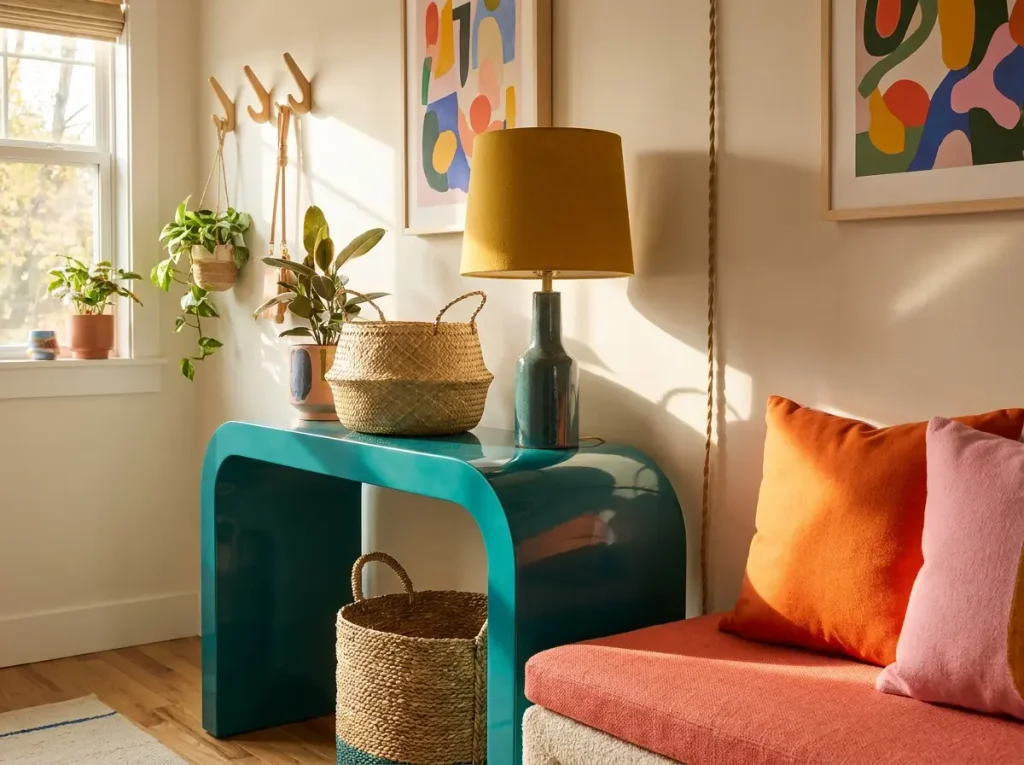
Lighting belongs in your dopamine decor 101 plan: sometimes an arrangement needs better placement or lighting rather than another accessory.
Observe the corner when you actually use it. A hallway may look inviting in afternoon sun but be difficult to navigate after dark. A reading nook may need a lamp positioned closer to the chair.
Use appropriate lighting for the task, with fixtures and bulbs compatible with one another. Keep cords out of walking routes and follow the product’s installation instructions.
Then consider how the space feels to touch. A glossy console, woven basket, and fabric cushion give a small entryway different surfaces to enjoy. You do not need all three in every corner.
If the room feels busy, try simplifying the object count while keeping the colors. If it feels uncomfortable, address the seat, rug, or lighting before adding more visual detail.
9. Set a Budget That Leaves Room to Experiment
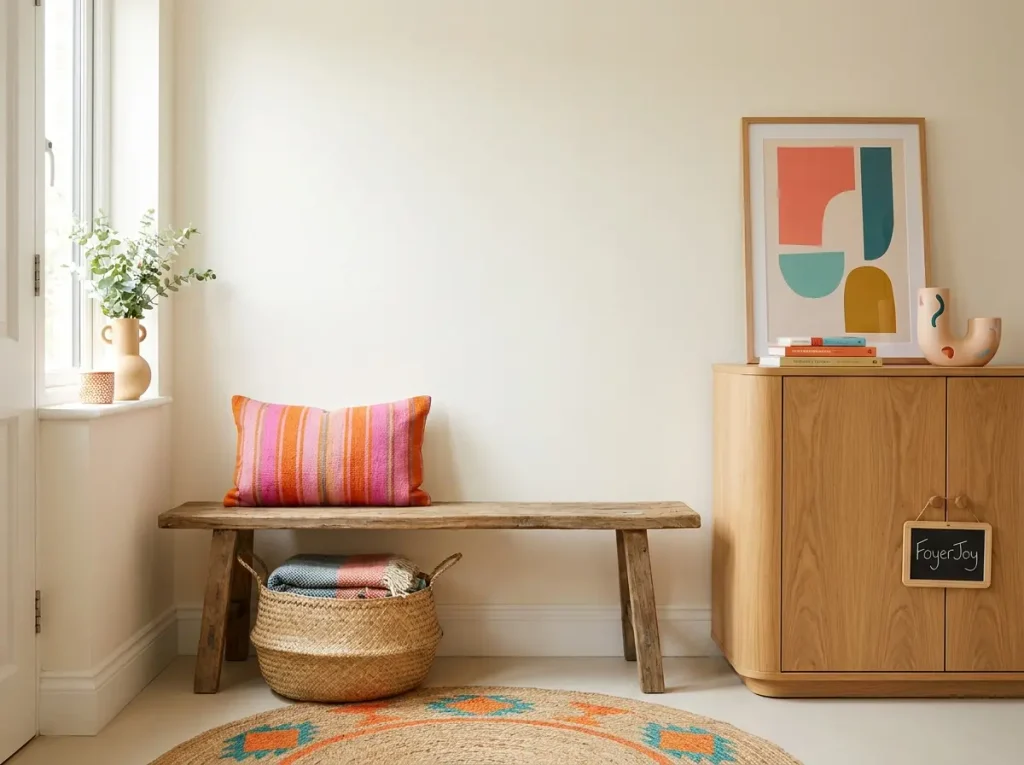
Make a dopamine decor 101 budget by writing down what you will keep, what you can move, and what is genuinely missing.
A practical makeover might include an existing bench, a basket borrowed from the bedroom, and one new cushion cover. That is enough to test a direction.
Choose a spending limit before browsing. Reserve money for necessary fittings, suitable materials, or the storage problem that prompted the project.
Renters can begin with movable furniture, textiles, and leaning artwork placed securely. Check your lease and get permission for alterations when required. Adhesive products may affect finishes; follow compatibility, weight-limit, and removal guidance.
For DIY projects, match paint and preparation products to the surface. Follow drying and curing instructions, and install shelves, hooks, and furniture restraints as directed.
Spend gradually. A small change you continue to enjoy is useful evidence for your next choice.
10. Use a One-Week Check Before the Next Change
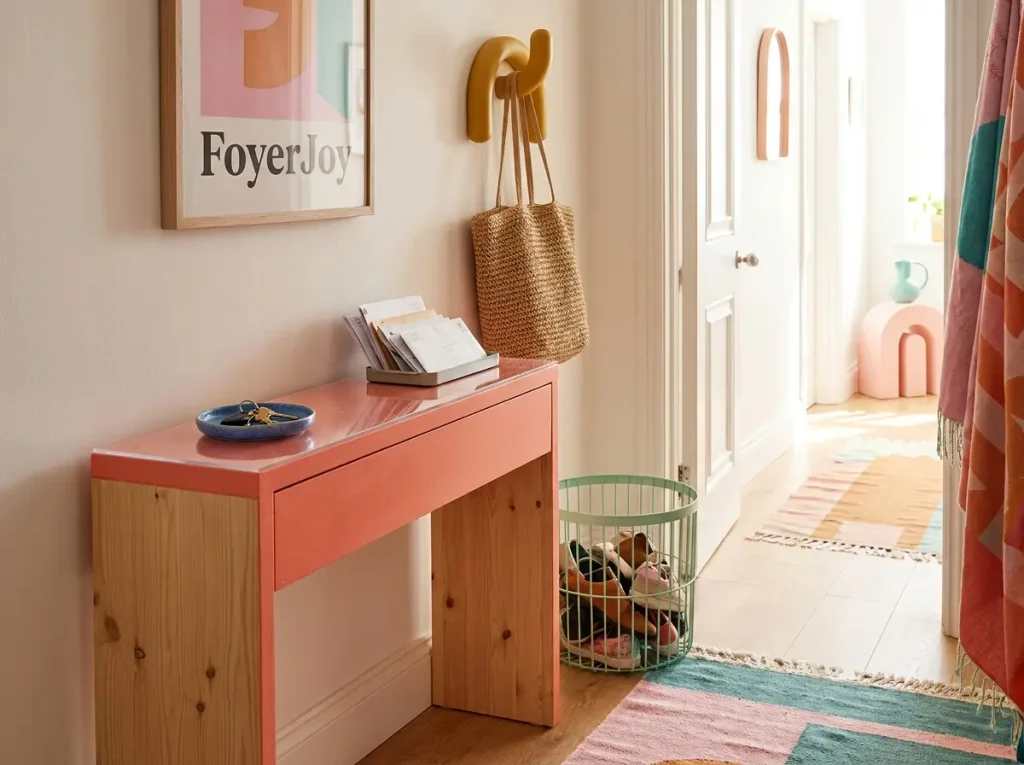
Put your dopamine decor 101 ideas to an everyday test: live with your updated corner for a week. Notice what happens during ordinary mornings and evenings.
Ask yourself:
- Can I find the things I need?
- Is the route through the room clear?
- Do I enjoy the colors in both daylight and evening light?
- Is anything difficult to clean or maintain?
- Which detail do I want to keep seeing?
Adjust the arrangement around those observations. Move the bowl if you still drop keys elsewhere. Reduce the accessories if mail has nowhere to land. Swap a cushion with one from another room if the color combination feels different than expected.
This check gives you a reason to keep, move, or remove each piece. You can continue building the look with more confidence and fewer unnecessary purchases.
Dopamine Decor 101: Frequently Asked Questions
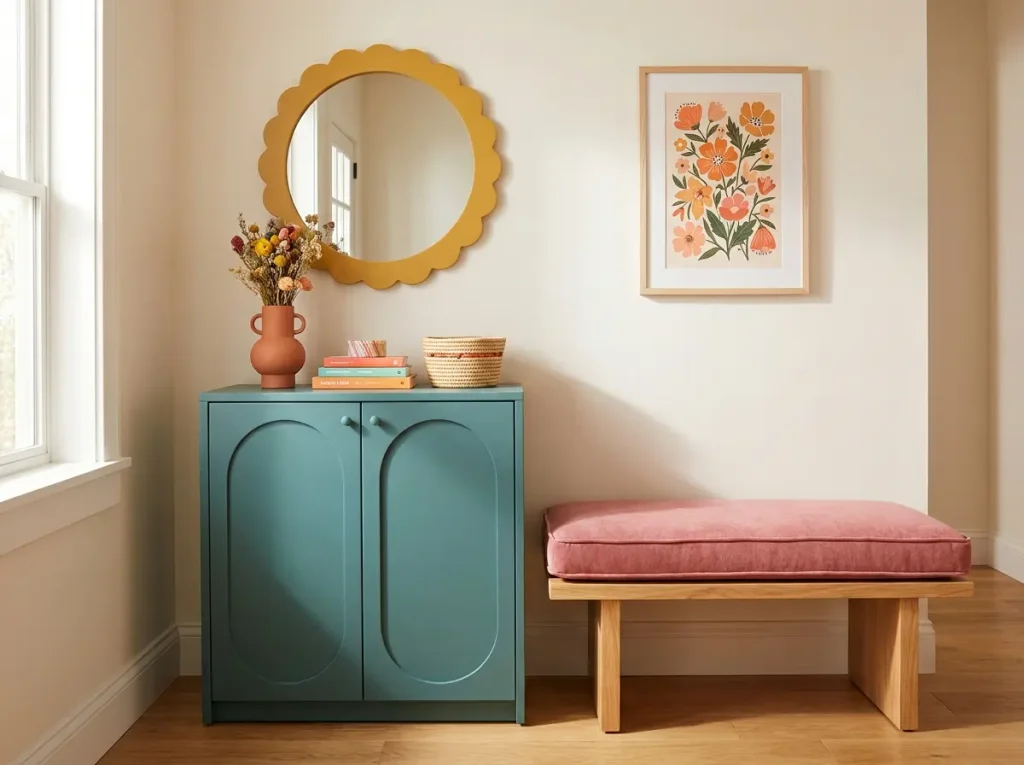
Can dopamine decor work in a small home?
Yes. Begin with useful pieces such as a key dish, cushion, frame, or basket. Measure larger furniture and keep the space needed for doors and movement clear.
Do I have to use lots of bright colors?
Choose colors you enjoy. You can use softer shades, deeper hues, or a few bright accents. The size and placement of the colorful pieces are yours to decide.
How do I connect rooms without making them identical?
Repeat one or two colors in different forms. Teal might appear on an entryway console, a living-room cushion, and a kitchen mug.
What is the cheapest place to begin?
The cheapest dopamine decor 101 project starts with rearranging belongings you already own. Give a favorite bowl a useful job, move a print, or change the location of a basket before buying anything.
Can decorating guarantee a happier mood?
No. This guide offers ways to make your home more personal and enjoyable to use. How you feel in it will vary; the style is not a guaranteed mood intervention.
How will I know when to stop adding things?
Stop when the area works comfortably and you enjoy looking at it. You can revisit it later without keeping a shopping list open.
Dopamine decor 101 comes back to this: a happy home can begin at the place you set down your keys. Choose one color you enjoy, one everyday problem to solve, and one familiar object you want to see more often. Give that corner a chance to become part of your routine before moving on.
Your daily dose of happy hues.