By Olivia Miller | FoyerJoy.com
A dopamine decor living room can start with a cushion you love sitting against, a picture that makes you smile, or a lamp that turns your evening reading spot into the best seat in the house. You get to decide which colors deserve more space.
These 20 ideas are a menu, not a shopping list. Pick the one that solves a real problem in your room, such as a bare wall, nowhere to put your mug, or a sofa that needs a softer landing. Then bring in a pop of color you already enjoy.
The rooms shown are illustrative styling concepts. Use their details as starting points, and adapt the scale to your furniture, layout, and budget. A happy hello can continue well beyond the entryway.
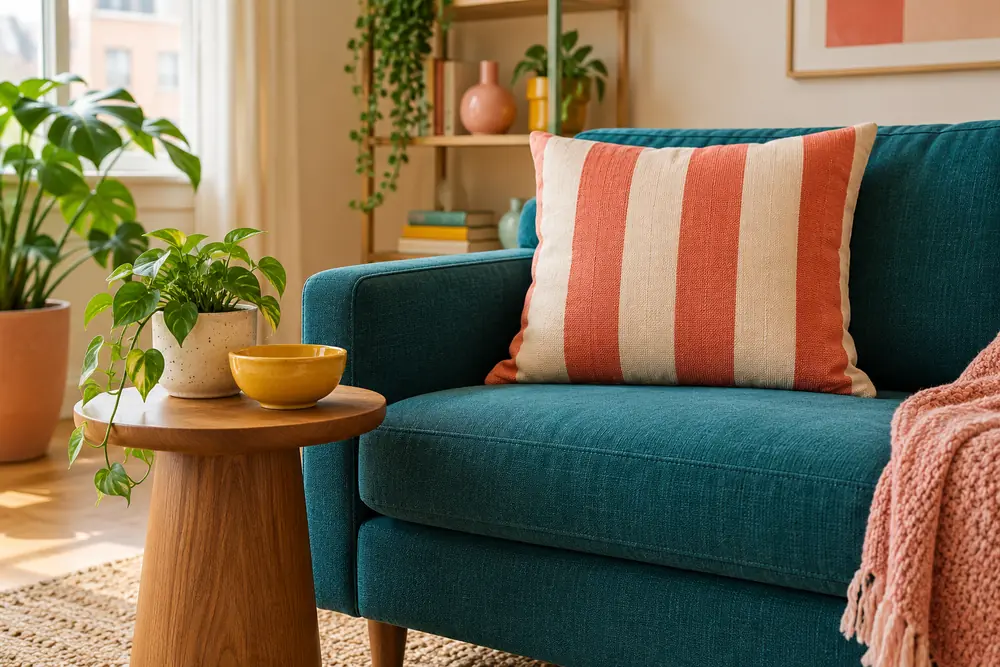
1. Start your dopamine decor living room with a striped cushion
An oversized stripe is easy to spot across a room, so one well-chosen cushion can change the whole seating area. Try coral and cream on a teal sofa, or mustard and pink on a sofa you already own.
Before ordering a cover, measure your existing insert and check the care instructions. Put the cushion where you actually lean, rather than lining every seat with a decorative obstacle. Repeat one stripe color in a nearby bowl or print for a simple connection.
2. Put a cheerful color on a secondhand side table
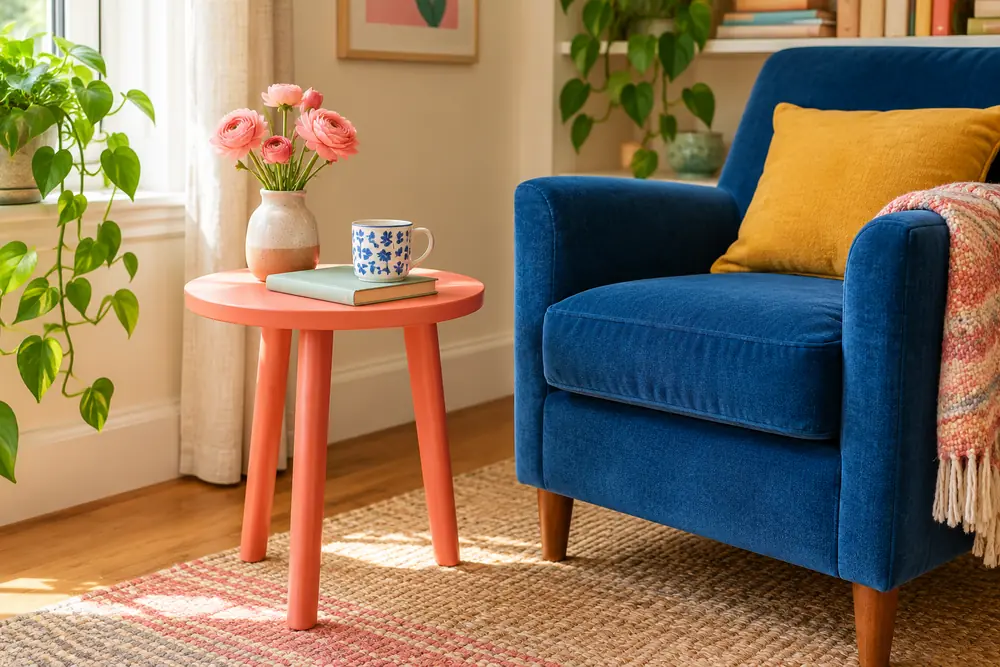
A small table gives you a manageable place to try a color you would hesitate to use across a wall. A coral table beside a blue armchair can provide a bright landing spot for a drink or book.
Check that the table is sturdy and its height suits the chair. If refinishing, identify the surface and follow the paint maker’s preparation and ventilation instructions. On a tight budget, changing the position of an existing colorful table may do the job without any paint at all.
3. Anchor your dopamine decor living room with a checked rug
A broad check can supply the room’s main pattern. Choose two colors that already appear in your seating or artwork, then keep nearby patterns at a different scale so everything remains readable.
Measure the seating area before you choose a size. Check door movement, rug thickness, and whether the rug needs a suitable pad for your floor. A rug you cannot vacuum or keep flat will quickly lose its appeal, however good the colors look on a screen.
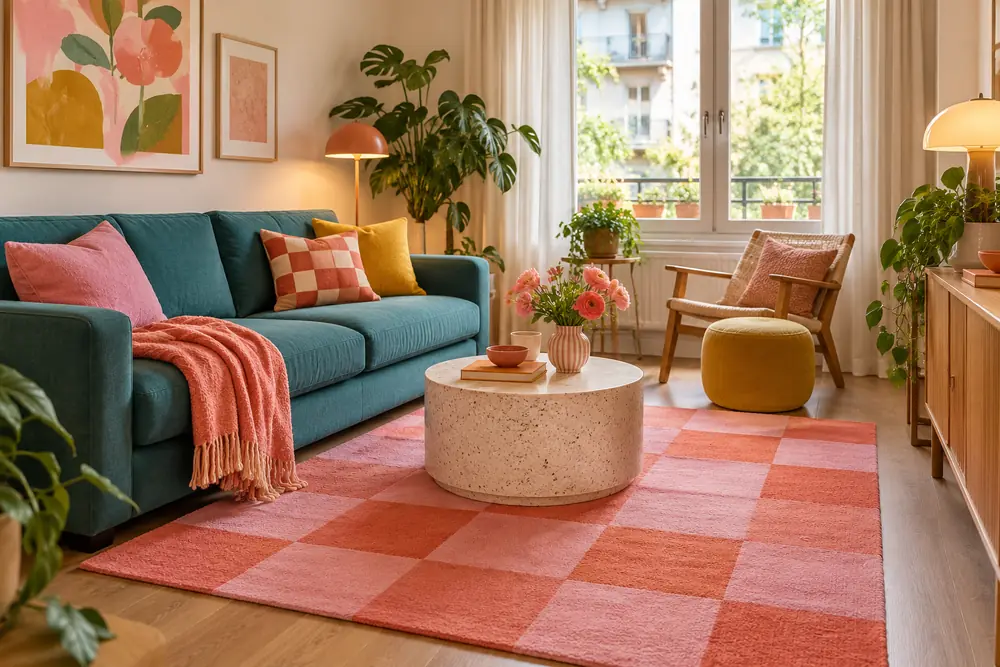
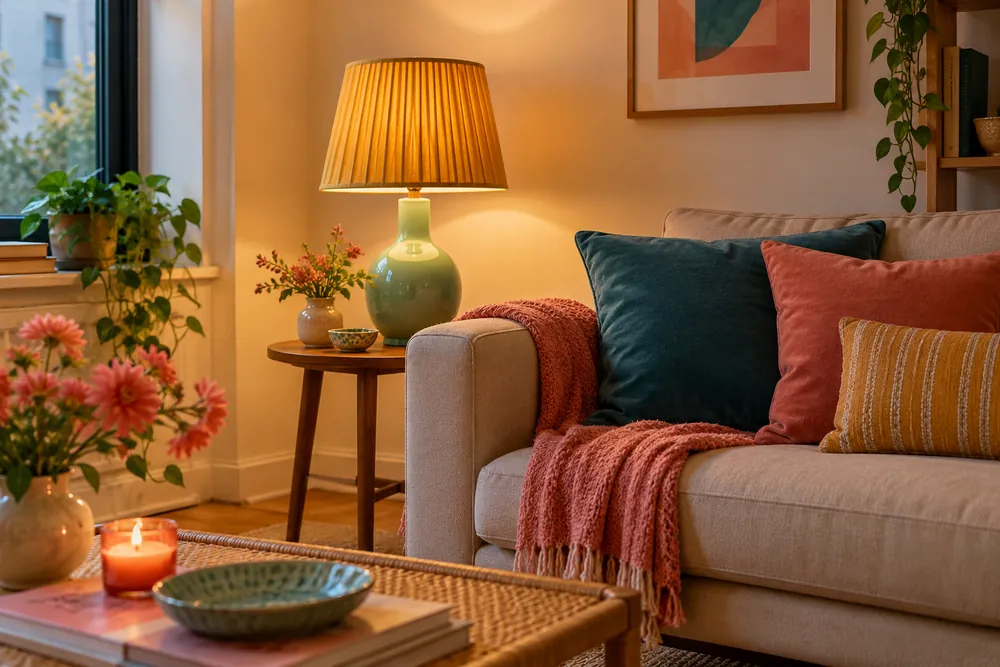
4. Turn one lampshade into a playful detail
A softly ribbed shade or a simple scalloped edge can add shape without needing more furniture. Choose a lampshade in a color that appears once elsewhere in the room, such as a mustard stripe in a cushion.
Use a shade that fits the lamp correctly and meets the lamp and bulb manufacturers’ requirements. Check the effect at night: a shade you love in daylight may cast a different color over the room when the light is on.
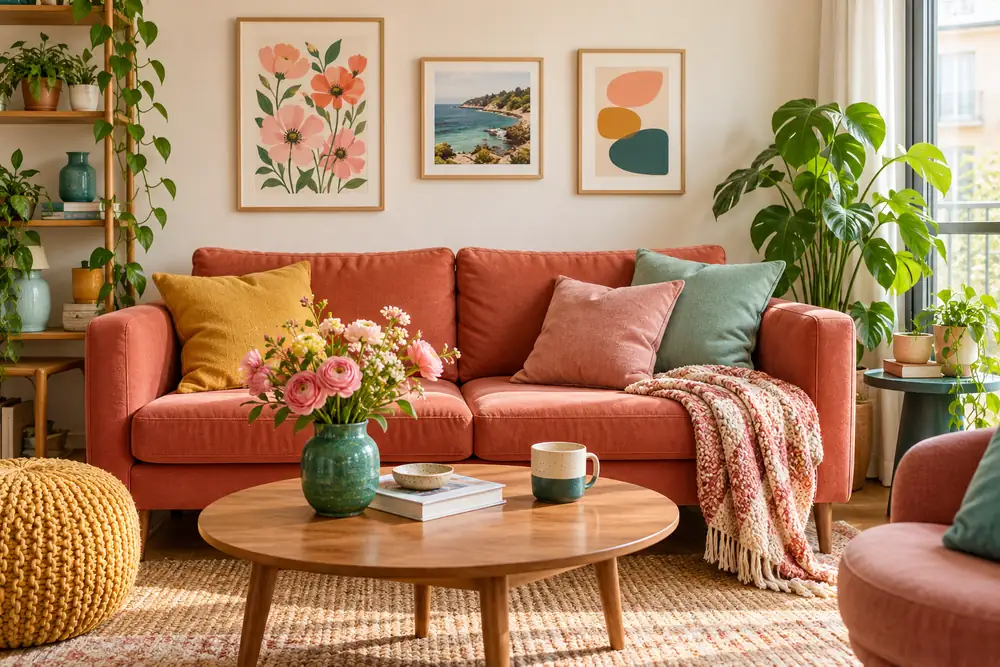
5. Make a three-picture gallery around one favorite print
Start with a print you would keep even if it stopped matching the sofa. Add a small photograph and a postcard, leaving enough space between them for each piece to stand on its own.
Lay the arrangement on the floor first and check its overall width against the furniture below. Use mounting hardware appropriate to the wall and the weight of each frame. Rental-friendly options still need surface checks and permission where your lease requires it.
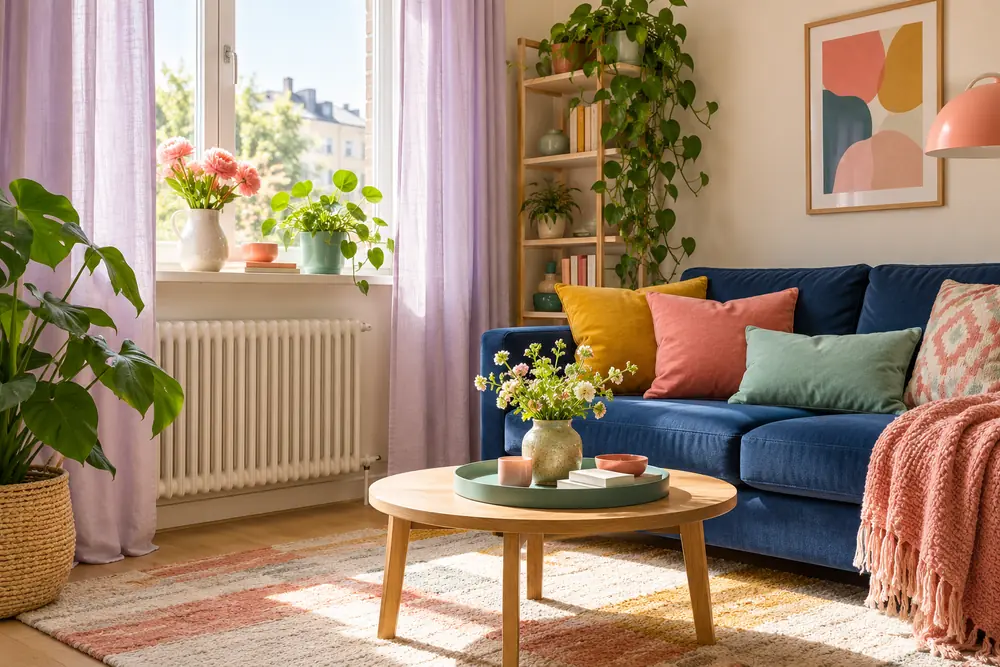
6. Let curtains carry a softer supporting color
If the rug and sofa already have strong colors, curtains can bridge the two. Pale lilac beside a deep blue sofa is one possibility; light mint beside coral is another.
Consider privacy, lining, cleaning, and how much daylight you want to keep. Measure the window and check that the fabric will clear heaters and furniture. In a dopamine decor living room, color still has a practical job: it should help you enjoy the space at the times you use it.
7. Add shelf color to your dopamine decor living room
A colorful back panel gives familiar books and ceramics a new setting. Try peach behind teal objects, or pale blue behind a collection of warm-toned pottery.
If you rent, work on furniture you own rather than altering built-in shelves without permission. An unattached sample board can help you judge a color before refinishing. Leave room for the books you actually use, and secure tall furniture according to the manufacturer’s instructions.
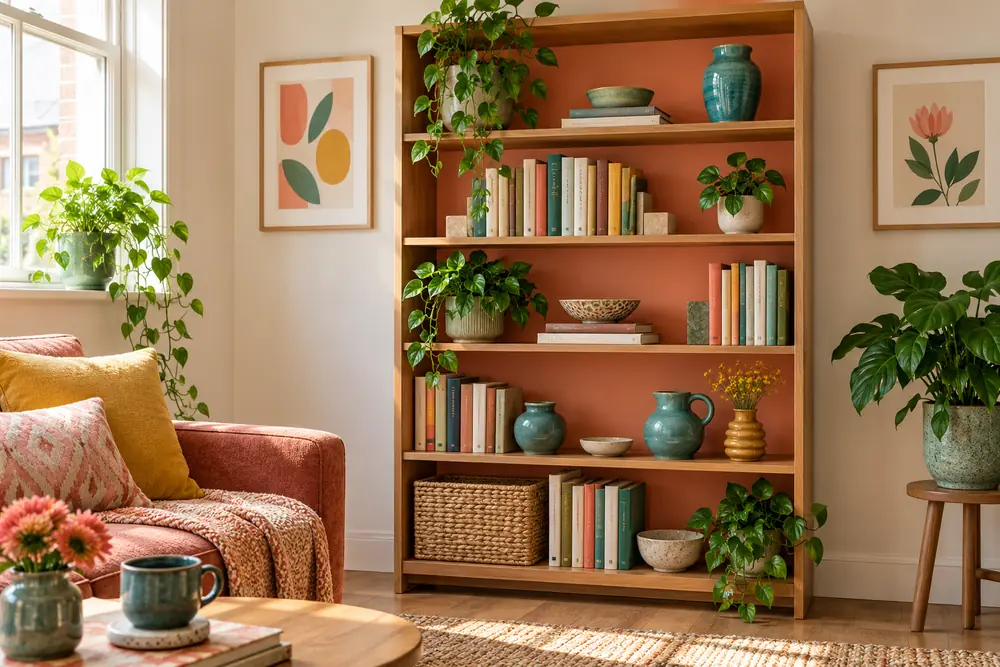
8. Choose a coffee-table tray that earns its place
A tray can gather remotes and coasters so they are easy to find. A mint or orange tray also gives a coffee table a clear patch of color without filling the whole surface.
Check its size against your usual routine. You should still have room to set down a drink or open a book. If the tray keeps getting moved to the floor, try a smaller one or use a colorful coaster instead. Useful little changes are often the easiest ones to keep.
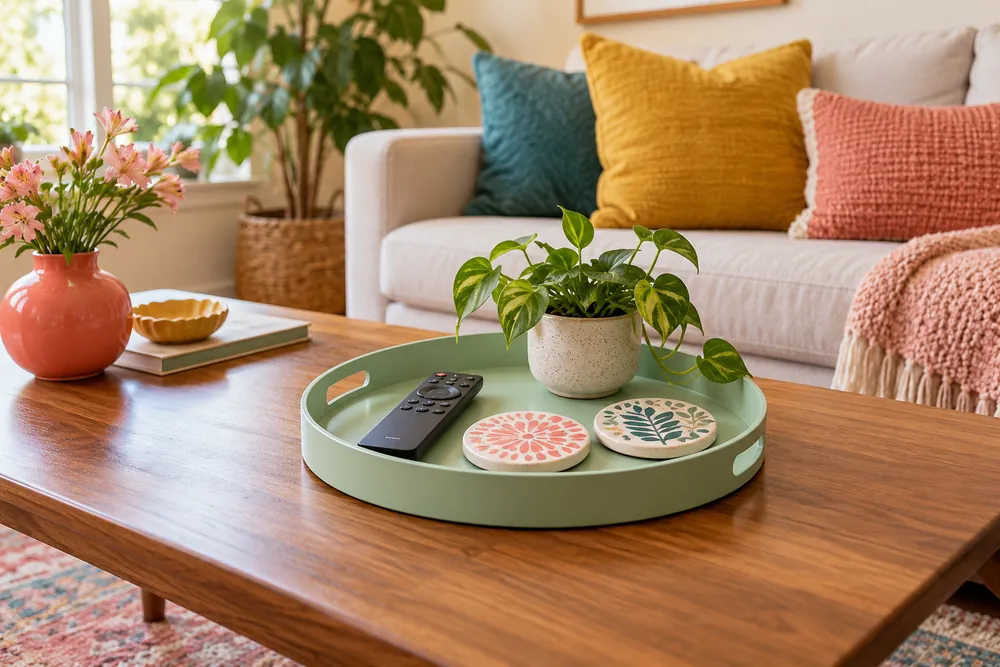
9. Repeat one color at three different heights
A pink cushion, a pink detail in wall art, and a pink planter can make a room feel connected without buying a matching set. The pieces do not need identical shades or finishes.
Walk back to the doorway and see whether your eye moves comfortably through the room. If one corner feels crowded, move an accent rather than adding another. Treat repetition as a loose arrangement exercise, not a rule that every object must follow.
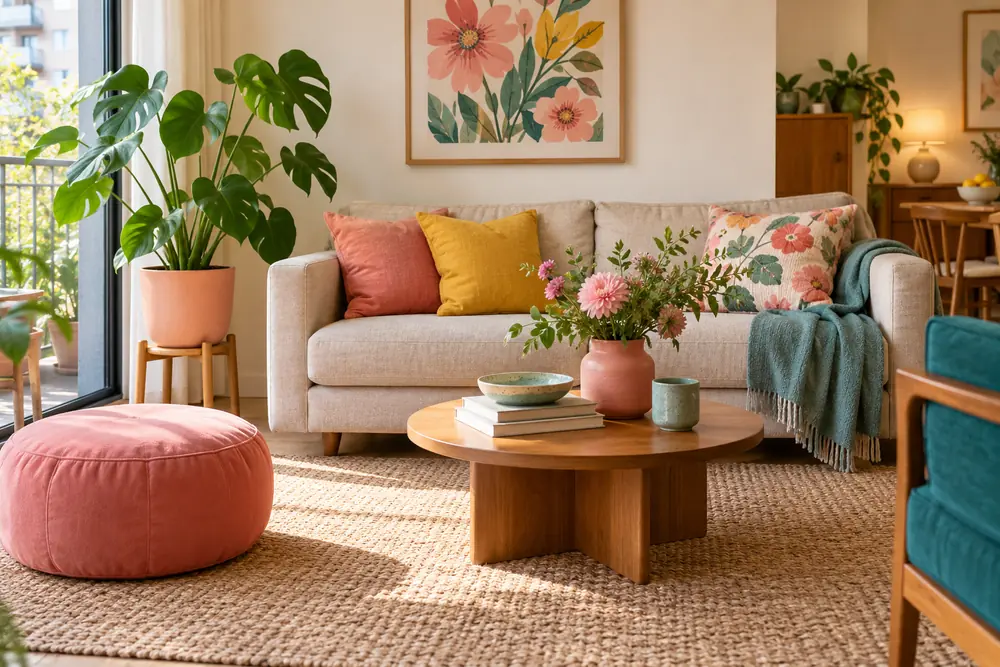
10. Give blankets a colorful basket
If throws usually end up on the floor, put a basket within reach of the sofa. A striped fabric basket or a woven basket with a colorful lining can add pattern while keeping the room ready to use.
Choose an opening wide enough to put a blanket away without folding it precisely. Check the handles and edges if the basket will move around often. A dopamine decor living room should make your evening easier, including the two-minute tidy before bed.
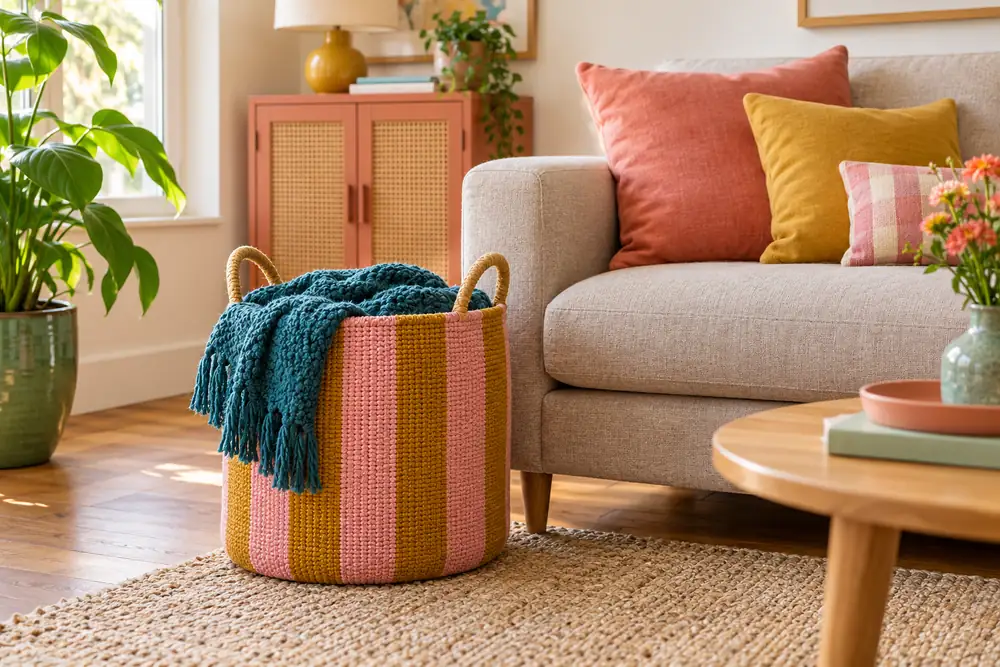
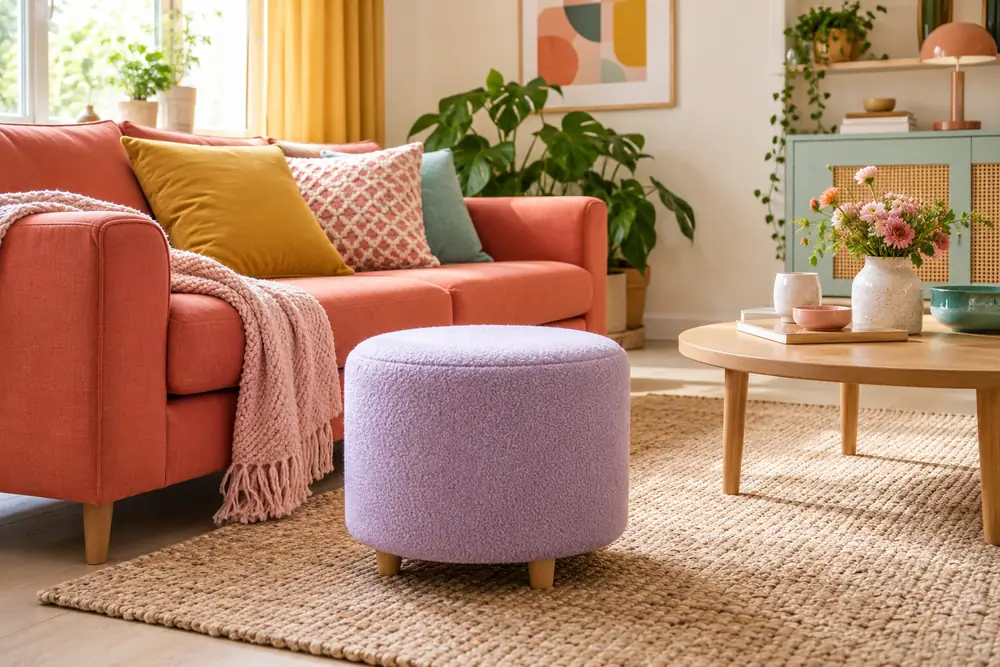
11. Use a small ottoman as a movable accent
A round lilac ottoman can soften a boxy furniture arrangement and provide a place to rest your feet. If you need occasional seating, choose a piece designed and rated for that use.
Map out where it will live when people walk through the room. A lightweight piece is useful only if there is somewhere sensible to move it. For a tiny room, one comfortable footrest may serve you better than another permanent chair.
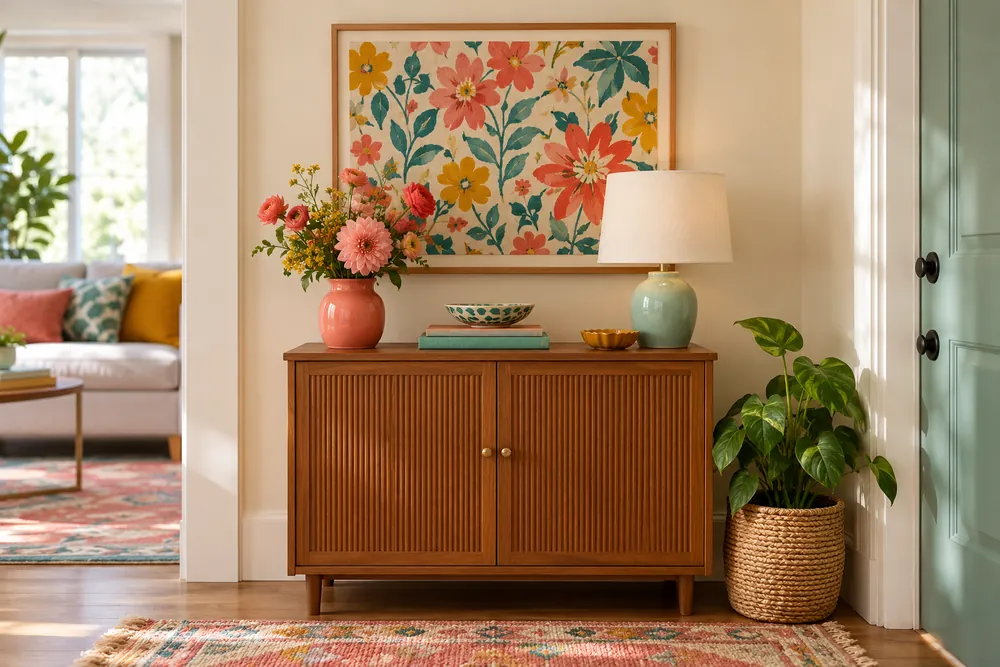
12. Frame a fabric remnant you already love
A scarf, offcut, or fabric sample can become artwork when its pattern means something to you. Place it in a frame that suits the textile’s thickness, and avoid trimming an irreplaceable piece just to fit a standard size.
This is a good place to use a pattern that would feel like too much across an entire sofa. Pair a busy floral with quieter nearby shapes so the detail is easy to enjoy. Keep delicate textiles away from strong direct sun where possible.
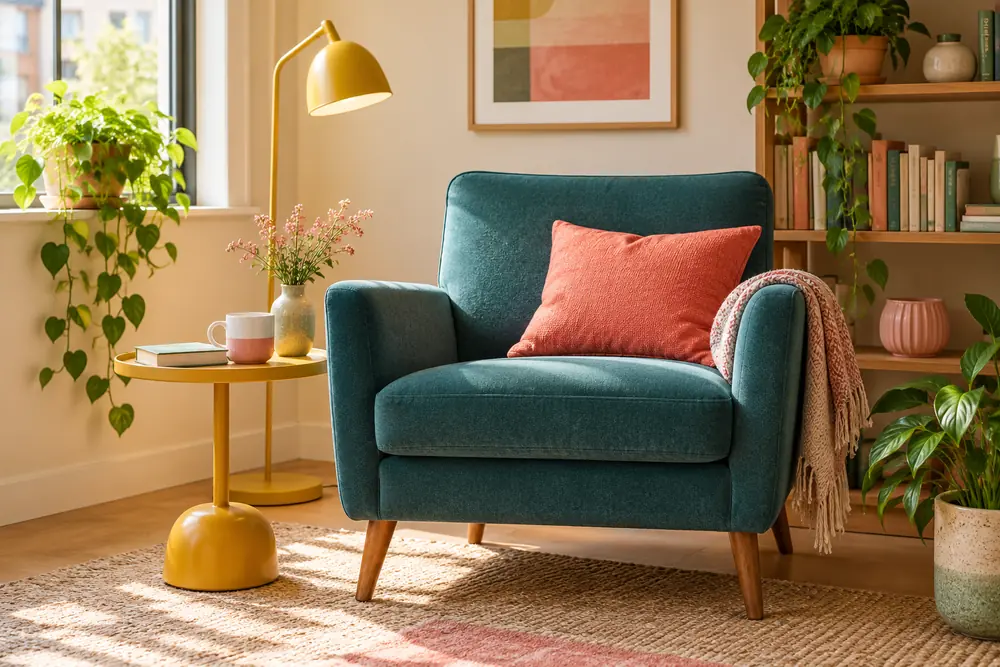
13. Build a reading corner around comfort first
Begin with a chair you can sit in comfortably, then place a light and a small surface where you need them. Add color through a cushion, a throw, or a picture within your sightline.
Try the setup with your book before deciding it is finished. Can you reach your drink? Is the light behind your shoulder rather than shining into your eyes? The best dopamine decor living room corner invites you to stay, rather than simply photographing well.
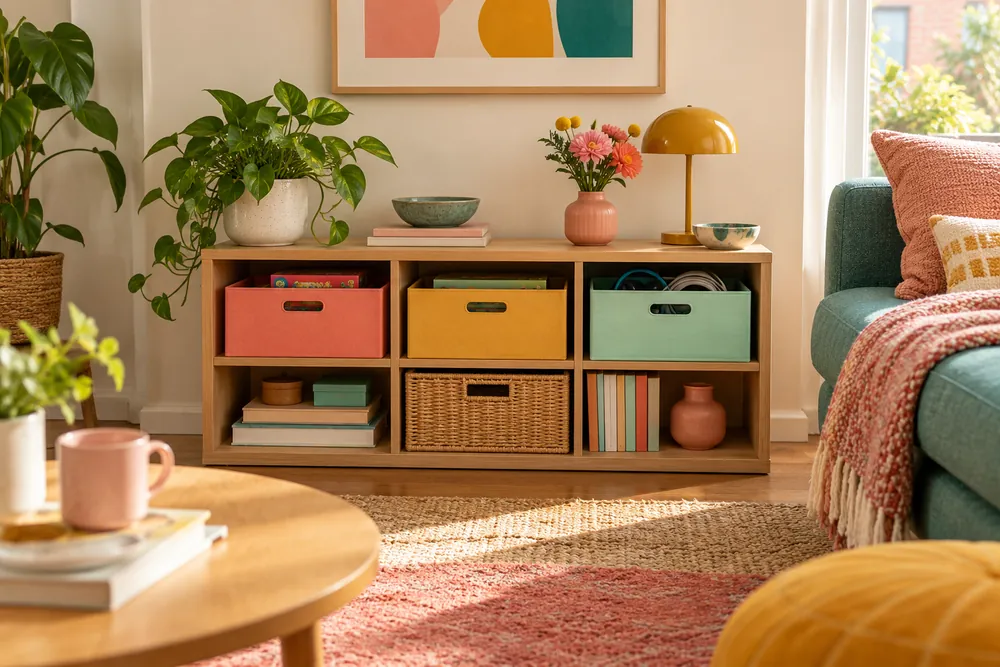
14. Make everyday storage part of the palette
Board games, chargers, and craft supplies all need homes. Colored boxes can organize them on a shelf, especially when each box has a clear purpose.
Measure what needs to fit before choosing containers. Leave the most-used box easy to remove, and avoid stacking it under several decorative pieces. You can start by covering a sturdy box you already own with suitable paper or fabric, keeping lids and handles functional.
15. Swap a matching cushion set for a small mix
Try one large stripe, one small floral, and one plain textured cover. Pull a shared color from the patterns so the mix feels related even when the shapes differ.
Keep the number of cushions suited to the sofa. If guests have to build a pile on the floor before sitting down, remove a few. Reuse inserts and rotate existing covers before ordering new ones; a different arrangement can reveal combinations you had overlooked.
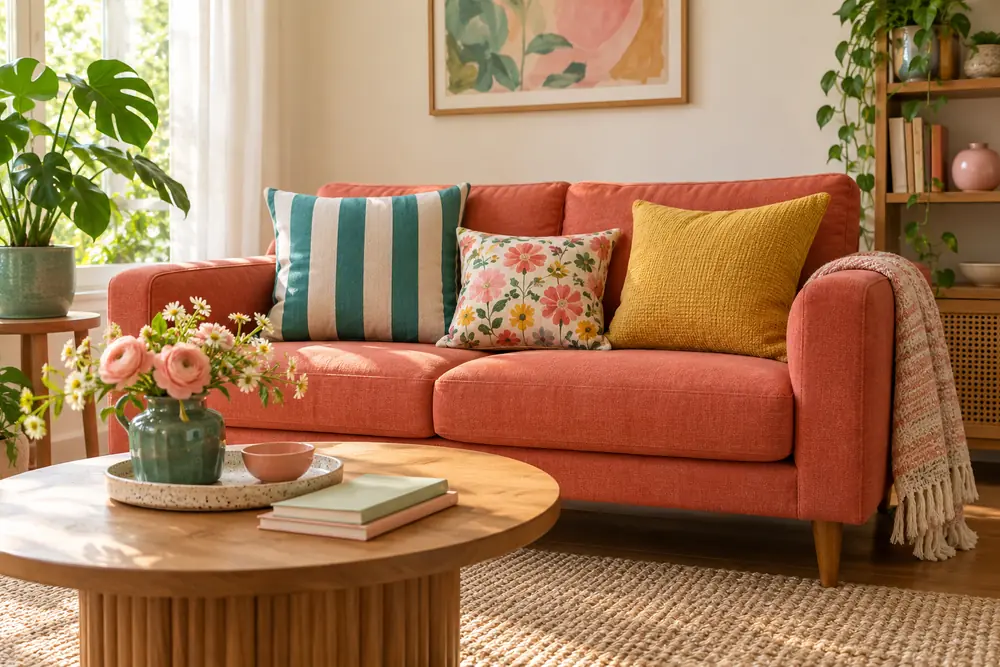
16. Let a plant pot supply a small pop of color
A coral cachepot can make a familiar plant feel newly placed. Start with a plant that suits the actual light and care you can provide, then choose the decorative outer pot.
Protect furniture and flooring from drainage water. A separate inner nursery pot can make watering easier, provided you empty excess water before putting it back. If your room does not suit a live plant, a bowl of colorful objects you already own can occupy the same visual spot.
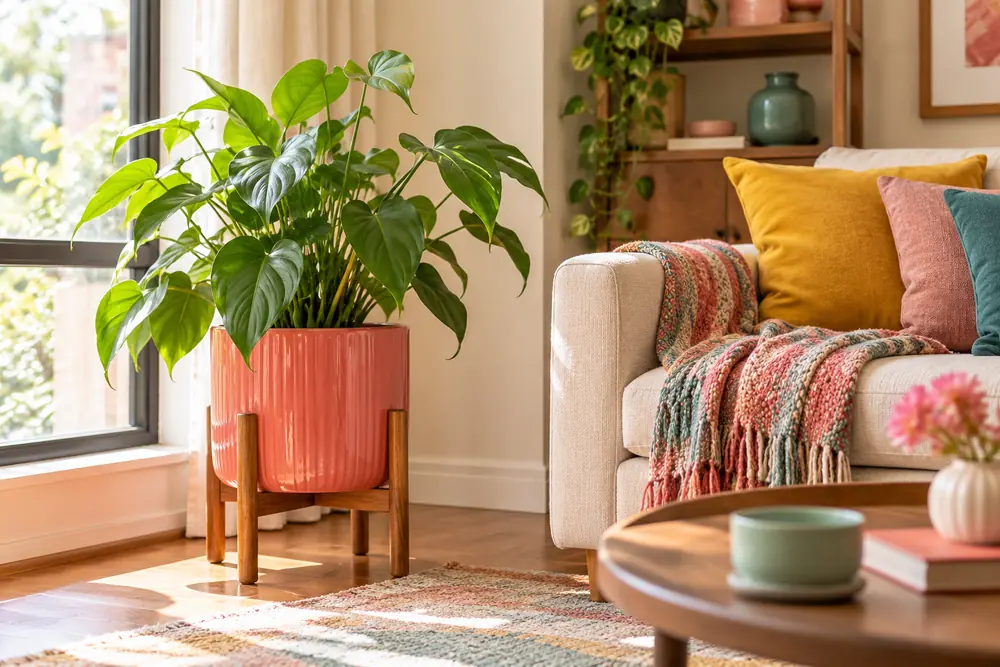
17. Echo your entryway palette from the sofa
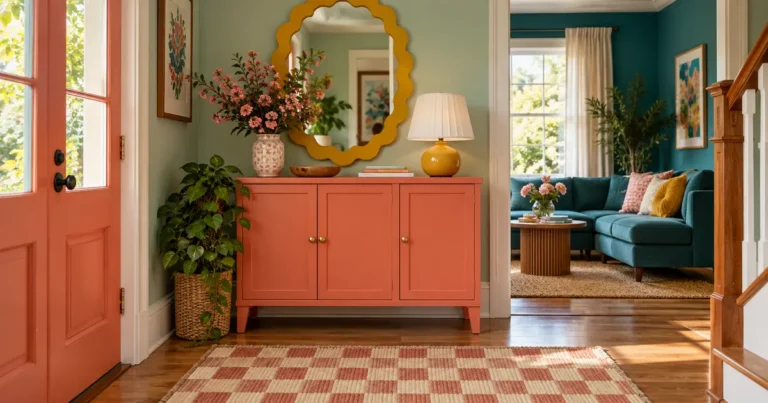
If the living room is visible from the front door, repeat one entryway color nearby. A mustard mirror in the hall might connect with a mustard cushion or lampshade in the living room.
Keep the connection light. Each space can have its own main color, and you do not need to replace everything between them. Stand at the entrance and look at the whole view before deciding where that next small accent belongs.
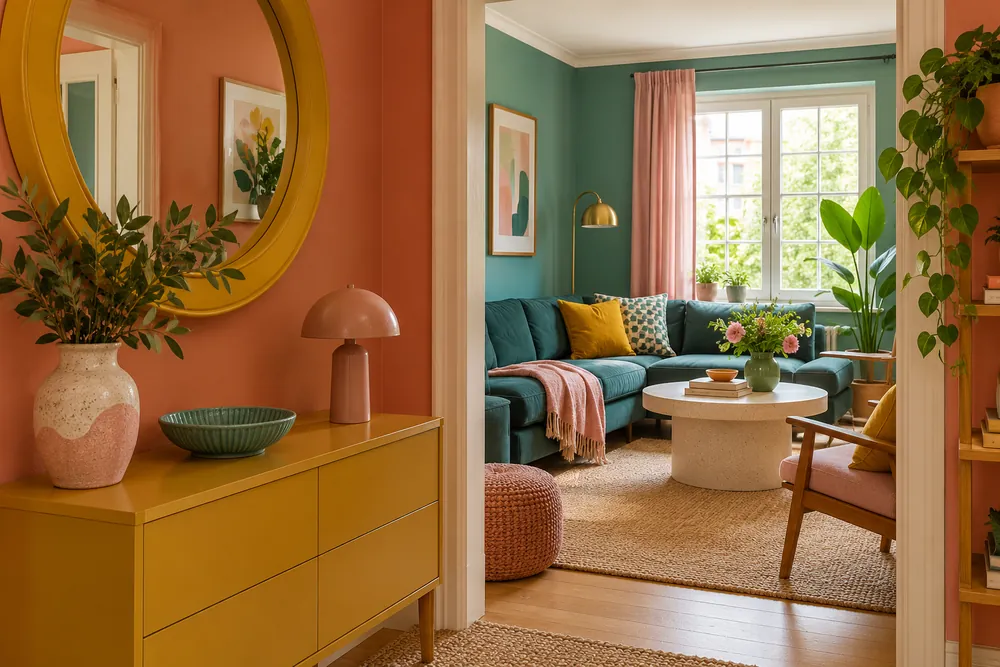
18. Give a low shelf one personal display
Choose a small group with a story: a travel bowl, a photograph, and a book you return to often. Let the rest of the shelf hold the things it was built to store.
Vary the heights enough for each piece to be visible, but avoid precarious stacks. In a dopamine decor living room, personal objects can carry more meaning than another trend-led purchase. You can rotate the display when you want a change without expanding the collection.
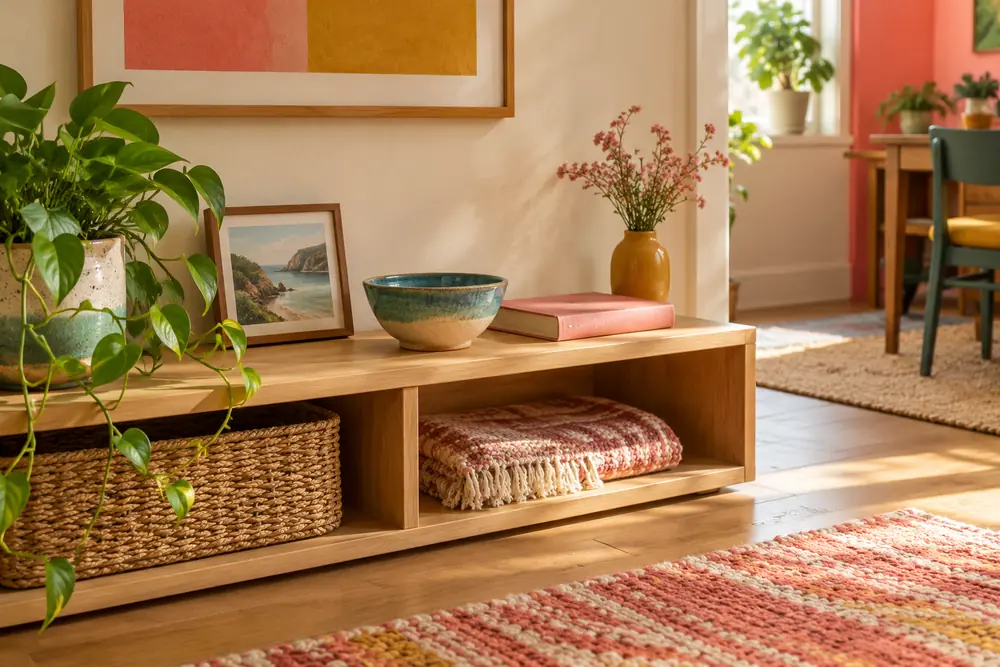
19. Move color closer to an overlooked corner
An empty-looking corner may simply need a better arrangement. Before buying anything, move a colorful chair, basket, or print there and view it from the room’s usual seats.
Keep outlets, ventilation, and routes through the room accessible. If the corner is dark, consider whether a suitable lamp would make it useful. Resist filling every gap: a little open floor can help a small room feel easier to move around.
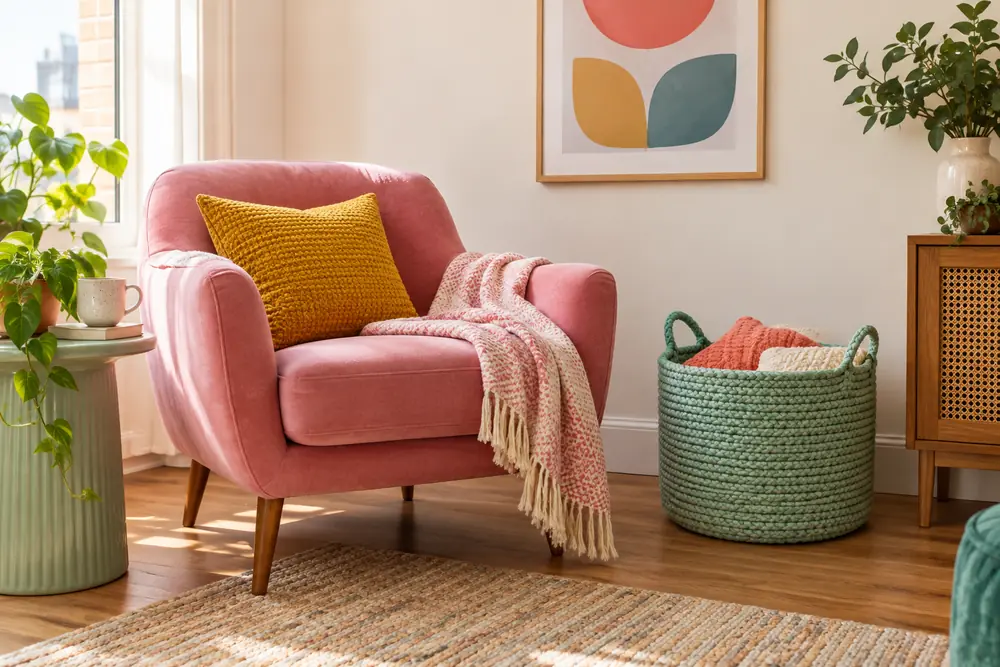
20. Create a rotating shelf for whatever you enjoy now
A shallow shelf can hold a current drawing, a record sleeve, or a seasonal postcard. Pick one location so changing interests have somewhere to land without spreading across every surface.
Keep the display light and use fixings suited to the wall and shelf load. When you swap an item, put the previous one away or return it to use. This gives your dopamine decor living room room to evolve while the everyday layout stays familiar.
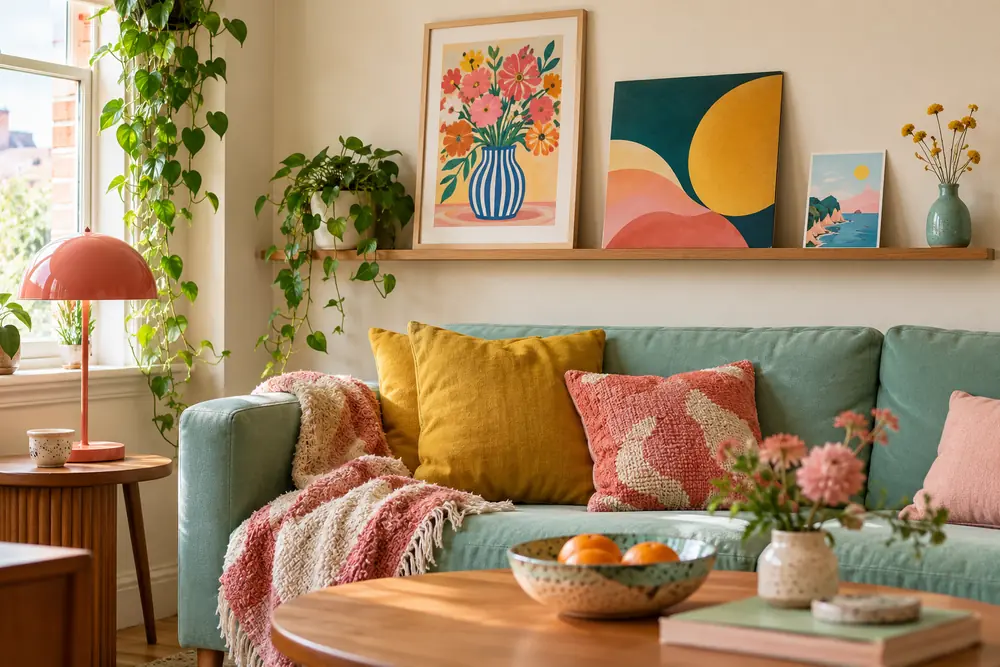
Choose your first dopamine decor living room update
Write down the part of your room that feels least useful. Then choose one idea above that addresses it. A basket helps with scattered throws; a side table helps with a drink that has nowhere to go; a picture can make an empty wall feel personal.
For a paint project, Benjamin Moore’s sampling guide explains how to compare samples under different lighting. Do that before committing to a furniture or wall color.
Quick questions
Can I do this with a sofa I cannot replace?
Yes. Use the sofa’s existing color as a starting point and bring in related textiles, art, and lighting. Changing what surrounds it can be enough.
How much should I buy at once?
Start with one planned change. Live with it through ordinary days before deciding whether another purchase would help.
Does every surface in a dopamine decor living room need decoration?
Leave room for drinks, books, games, and the other things you do here. An enjoyable room has space for daily life.
For another starting point, explore colorful ideas for every room or connect your room to a colorful entryway palette.
Save this guide for later